Operations | Monitoring | ITSM | DevOps | Cloud

Latest posts

How to prepare for changes in the workplace

Transitioning back to the office is becoming more of a possibility with each coming day. But managing the transition can leave you feeling overwhelmed. Where do you start? How will work be different after a year of working remotely? And how will you balance management of a remote and in-person workforce? The ServiceNow on-demand Back to Work webinar series can help you prepare for changes in the workplace post-COVID-19 in four key ways.

Elastic: Introducing Elasticsearch ingest pipelines and best practices

Elasticsearch is a powerful search and analytics engine, but it's only as good as the data you put into it. In this webinar we'll show how data can be transformed before being stored inside Elasticsearch. We'll start with an overview of the various data ingest capabilities offered by the Elastic Stack. Then, you'll learn about architectural best practices for building scalable and highly available ingestion pipelines.

eG Innovations: Digital Workspaces in the New Normal Survey Results

The last year has been tumultuous for everyone. For the end-user computing community, it was an extraordinary time with everyone having to deal with new requirements from their businesses at short notice. Over the last 3 months, xenappblog and eG Innovations conducted a survey to learn how organizations have adapted their digital workspaces to the new normal. We have invited three EUC experts to analyze and share their thoughts on the key findings of this survey of over 1,050 digital workspace professionals.

StackState 101: Explore Relationship-Based Observability (Copy)

With more data than ever, observing the big picture is still hard. StackState virtually relates all of your data so you can answer the hard questions. What changed and who should be concerned? Two of the hardest questions you have to answer. Not any more. In this live session, we will demo how Topology and Relationship-Based Observability gives you new superpowers, like...

On-boarding Remote Workers with Service Watch

It’s been more than half a year since I joined Exoprise. When Covid-19 struck last year, it became clear that companies would expand their hiring requirements beyond local regions and find suitable candidates (just like me!). Remote work and the requirement for on-boarding remote workers no longer became a luxury. This is reflected in job portals and HR sites such as Indeed and Glassdoor where they began to insert a new tag “Remote WFH Option Available”.

Azure security 101: Security essentials, logs, authentication, and more

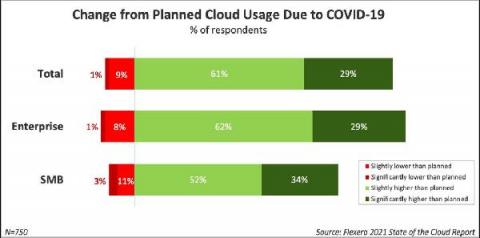
“Where necessity speaks, it demands”. This old saying seems particularly apt right now with the pandemic forcing organizations to completely change the way they think about their IT networks. That rapid shift to remote work has resulted in a massive demand for cloud-based services.

Sysdig Adds Unified Threat Detection Across Containers and Cloud to Combat Lateral Movement Attacks

Sysdig introduces continuous CSPM to the Sysdig Secure DevOps Platform, multi-cloud threat detection for AWS and GCP, and a new free-forever cloud security tier. With 70% of cyberattack breaches utilizing lateral movement, Sysdig uniquely detects and responds to threats across cloud and containers.

Managing CI/CD pipelines with Arm compute resource classes

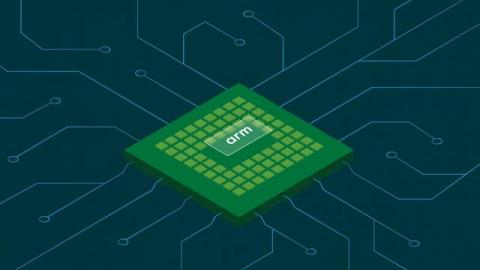
CircleCI has released new Arm-based compute in preview. Arm processors and architectures are becoming widely available as development teams adopt them as compute nodes in many application infrastructures. Organizations that need to run microservices, application servers, databases, and other workloads in a cost-effective way will continue to turn to the Arm architecture.

Detect suspicious activity in GCP using audit logs

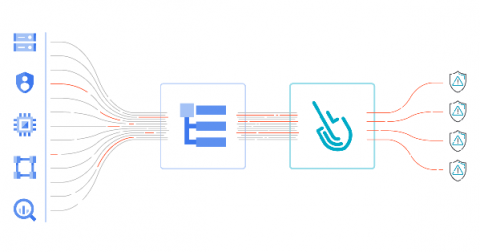
GCP audit logs are a powerful tool that track everything happening in your cloud infrastructure. By analyzing them, you can detect and react to threats. Modern cloud applications are not just virtual machines, containers, binaries, and data. When you migrated to the cloud, you accelerated the development of your apps and increased operational efficiency. But you also started using new assets in the cloud that need securing.