Operations | Monitoring | ITSM | DevOps | Cloud

Latest posts

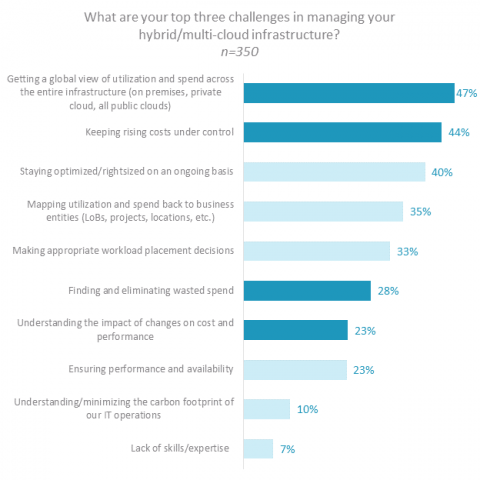
Is Your Cloud Spend Problem a Cloud Cost Tracking and Accountability Problem?

Most companies overspend on cloud services. Many factors contribute to this problem, and while organizations know that their cloud budgets are bloated, they still struggle to reel in those costs. Are they implementing the tools and processes to track their cloud costs effectively? And are they adopting controls to instill discipline and accountability in their cloud spending habits? We explored these questions in our latest State of Multi-Cloud Management research report.

Understanding the Different Types of Server Solutions for Your Business Needs

When it comes to running a successful business, there are certain decisions that have to be made in order for things to run smoothly. One of those important decisions you must consider is which type of server solution will best meet your needs. Whether you're just getting started or already have an existing infrastructure, understanding the different types of servers available and how they work can help ensure you choose the one that will give you maximum performance and efficiency.

Why You Should Use Docker Over Buildpacks

Buildpacks and Docker are popular containerizations and modern software development tools that package and deploy applications that provide portable and reproducible containers. While providing similar end results, they have different approaches and use cases. In this article, I will expose our experience at Qovery dealing with Buildpacks and why we strongly advise you to move away from it as soon as your project gets any more serious.

How the All-In Comprehensive Design Fits into the Cribl Stream Reference Architecture

Join Cribl's Ed Bailey and Ahmed Kira as they provide more detail about the Cribl Stream Reference Architecture, which is designed to help observability admins achieve faster and more valuable stream deployment. During this live stream discussion, Ed and Ahmed will explain the guidelines for deploying the comprehensive reference architecture to meet the needs of large customers with diverse, high-volume data flows. They will also share different use cases and discuss the pros and cons of using the comprehensive reference architecture.

9 incident management solutions to improve your workflows

Incident management is a team effort. While it's true that incident management should be seen as a company-wide effort, and you should empower all teams to declare incidents, this differs from the team effort I'm referring to here. No, incident management is a team effort in the sense that no one tool can do it all, not even incident.io. We covered as much when we discussed why we integrate with tools that can be seen as our competitors – and that’s OK!

10 DevOps Tools for Continuous Monitoring

DevOps has become the dominant software development and deployment methodology over the past decade. In Atlassian’s DevOps Trends Survey, over half of the respondents said that their organizations had a dedicated DevOps team and 99% of respondents indicated that DevOps had a positive impact on their organization. In addition to DevOps teams, many have implemented Platform Engineering as a discipline, or designing technology platforms as a foundation for developers to build and deploy applications.

What are the costs of downtime?

Downtime can be a nightmare for any online business. As the digital landscape continues to expand, the importance of maintaining a reliable and stable online presence has never been greater. While most businesses recognize the direct costs associated with downtime, such as lost revenue and productivity, there are hidden costs that can have a lasting impact on your business.


Sponsored Post

Digital Transformation is a Challenge. Use No Code Workflow Automation

Digital transformation is the process of integrating digital technologies into various areas of a business to modernize, optimize, and streamline key business processes. This can alter the way a business operates and delivers value to customers. The digital transformation journey can often include major shifts in culture, processes, and technology.