Operations | Monitoring | ITSM | DevOps | Cloud

The latest News and Information on APIs, Mobile, AI, Machine Learning, IoT, Open Source and more!
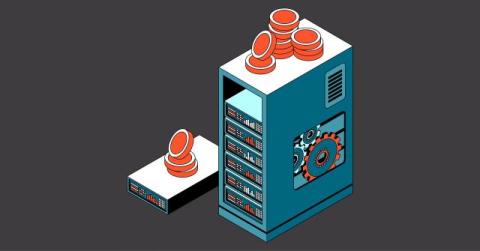

CoreWeave pricing in 2026: every GPU rate and what a node really costs

CoreWeave, a GPU cloud provider, prices start at $6.16 per GPU hour for an Nvidia H100 and reaches $8.60 for a B200, sold as fixed multi-GPU nodes: an 8x H100 node lists at $49.24 per hour on demand. Spot rates run up to 60 percent below on demand, reserved contracts discount up to 60 percent, and egress is free.

n8n pricing in 2026: every plan, the execution math, and what AI agents change

n8n pricing runs €24 per month for 2,500 workflow executions (Starter), €60 for 10,000 (Pro), and €800 for 40,000 (Business), with 17 percent off on annual billing and custom Enterprise pricing above that. Every plan includes unlimited users and unlimited workflows. The self-hosted Community Edition is free with unlimited executions; you pay only for your server.

McKinsey Says Agentic Enterprises Need "Automated Guardrails." Here's What That Means

TLDR/: McKinsey’s new research on AI transformation, published August 28, 2026, studied 20 companies that have created real economic value from AI and found that only a small number have reached “Stage 3: Agentic AI enterprise.” The capability that separates Stage 3 from Stage 2, per McKinsey’s own maturity framework, is orchestration layers and automated guardrails: the ability to govern agent actions automatically, in real time, rather than reviewing them after the fact.

Challenges and Limitations of Open Source Software

Open source software (OSS) offers organizations access to flexible, customizable, and often free software. It can reduce licensing costs and provide access to a large community of developers and users. However, open source does not automatically mean free, simple, secure, or risk-free. Organizations using OSS can face challenges around technical support, security, licensing, maintenance, functionality, and internal expertise.

Top Shopify Agencies for B2B ERP Integrations in 2026

For manufacturers, distributors, wholesalers, and other B2B businesses, a Shopify implementation often depends as much on back-office systems as it does on the storefront. An ERP may remain responsible for inventory, product information, customer accounts, pricing, payment terms, orders, invoices, or fulfillment. If Shopify and the ERP operate independently, teams can end up re-entering orders, correcting inventory, reconciling pricing, and manually updating customer records.

Top Legal AI Tools for Reducing Manual Work Across the Personal Injury Case Lifecycle in 2026

Personal injury cases create a lot of work that has little to do with making legal decisions. Someone still has to review medical records, find details buried in case files, build chronologies, prepare demands, draft documents, organize evidence, and keep case information up to date. Legal AI can take some of that work off the team's plate. The most useful tools are not necessarily the ones with the most features. They are the ones that address the parts of a case where attorneys, paralegals, and case managers are spending hours on repetitive work.

Absorption vs diffusion: understanding acoustic panels

Among acoustic panels, the two most common types are absorbers and diffusers. Although both improve a room's acoustics, they work on completely different principles and suit different situations. Understanding this distinction matters, because using the wrong solution can not only fail to fix a problem but actually make it worse.

Why Smart Businesses Are Rethinking Waste Management as an Operational Strategy

Waste management rarely makes it onto the list of priorities when businesses think about operational efficiency. Companies invest heavily in optimizing supply chains, streamlining workflows, and adopting new technology, yet the way they handle physical waste - from office cleanouts to construction debris to seasonal overflow - is often treated as an afterthought. That oversight can be costly.

The Best B2B Cross-Border Payment Solutions in 2026

Moving money across borders is not one problem. There are four, and most buyers discover the other three after signing. Reach, meaning whether a provider can pay into the markets and instrument types your recipients actually use. Settlement speed, where correspondent banking still fails. Cost transparency, since intermediary fees stay invisible until reconciliation. And compliance, the one that stops a launch rather than slowing it.