Operations | Monitoring | ITSM | DevOps | Cloud

Introducing Agent v2 beta for Kubernetes

In the olden days, we used to have to get logs by putting our agent on one machine at a time, like hitching a horse to a horse-drawn carriage. But now, we’ve got Kubernetes. It’s like a horse factory, and we’ve got more horses than we know what to do with. In this wild west of containerization, we could quickly end up underneath more logs than our old-timey agent could keep track of! But now there’s a new sheriff in town.


S3 Bucket Lambda Function

AWS has a lot of services, and they all generate logs. A lot of logs. We’ve worked hard to make sure you can capture logs from every source and service on AWS, and today we’re happy to announce the final piece of our AWS logging puzzle: LogDNA’s S3 Collector integration. It’s an easy-to-use Lambda function that lets you ingest any AWS logs that get dumped to S3 – like logs from CloudFront and ELB.

Here's How the Internet of Things is Transforming Healthcare

Industry 4.0 technology is transforming industry all over the world. Digital innovations such as data, virtual reality, automation, and robotics are all helping brands create products and services and deliver them to customers in better and more efficient ways than ever before. One of the most useful elements of Industry 4.0 technology comes from the Internet of Things.

Announcing secrets management in Sensu Go

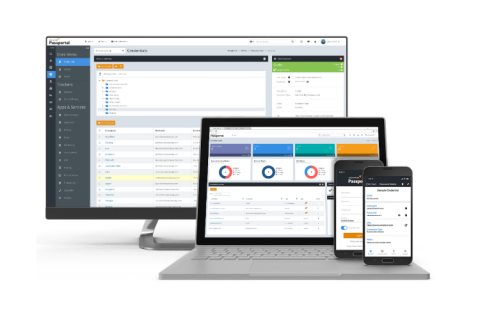
In order to determine the health and current state of your systems, monitoring by its very nature requires access to internal and external services. Traditionally, users have had to get creative in terms of how they expose sensitive information (secrets, like access credentials) to their monitoring tool; operators typically would leverage local environment variables or give up entirely by putting secrets in the monitoring configuration.

DevOps Incident Management: A Guide With Best Practices

This is the one post I hope you’ll never need. However, should you ever need it, this is your one-stop shop for understanding how to proceed with DevOps incident management. Have you just been attacked? Did the commit go wrong? A CI pipeline went haywire? Don’t worry. I got you.

The Data-to-Everything Platform: What It Is, What It Means

As a company leader, what value are you extracting from your business and IT? What about from security data lakes and processes? Are you able to drive speed for your business because of real-time, advanced analytic capabilities? Successful companies are making technology architecture their business architecture—aligning stakeholders, processes, data, and analytics in an integrated fashion to deliver faster, data-driven decisions that are more accurate than ever before.

University College on top of real-time Office 365 User Experience using NiCE Active 365 Management Pack

NiCE IT Management Solutions is proud to serve global key-players in advanced Microsoft Office 365 performance and health monitoring. Read the latest customer reference on how the NiCE Active 365 Management Pack is helping a University College to stay on top of Microsoft Office 365 monitoring operations.

Why Banks Need APM?

The go-to solution for BFSI The banking industry is based heavily on business-critical customer-facing applications, many of which are available on a mobile platform. Clients expect these programs to have negligible downtime. The banking industry has been way ahead in embracing DevOps practices, as it needs to deliver user experiences that go beyond their expectations.

IBM and Sysdig team up to extend security governance with IBM Cloud Pak for Multicloud Management

Sysdig, an industry leader for monitoring and security of cloud-native workloads, and IBM have joined forces to bring a fully Integrated powerful platform that delivers the security and performance that enterprises need in today’s multi-cloud world. Sysdig Secure and the IBM Cloud Pak for Multicloud Management (MCM) can help you accelerate Kubernetes and cloud adoption by addressing security and regulatory compliance from the start on enterprise hybrid cloud environments.