Operations | Monitoring | ITSM | DevOps | Cloud

Beyond the Tower: The New Era of High-Performance Virtual Mobility

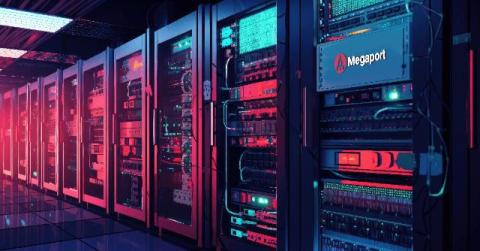
For over a decade, the narrative of premium interactive entertainment has been defined by a single, immovable object: the high-end PC tower. It was the centerpiece of the "battlestation," a glowing monolith of silicon and cooling fans that anchored a player to a specific desk in a specific room. If you wanted the best textures, the highest frame rates, and the lowest input lag, you simply had to be there.

Six ways to grow your already successful business

When you run a business, to be successful there are a few things you have to do. One of these things is ensuring you are always pushing to progress and develop. By always working towards the future, it helps you stay on top and not fall behind - if you start falling behind, it can be tough to turn things back around, as mentally you may have been affected.

The single pane of glass approach to cloud monitoring

Dozens of SaaS services you depend on, starting from Google Workspace and Slack to Shopify, may experience downtime, partial outages, or degraded performance. And most have their own status pages, APIs, or RSS feeds. Juggling all these sources is exhausting, and many teams suffer from alert fatigue, missed early warnings, and fragmented visibility.
Sponsored Post

How to Centralize Incident Notifications in Slack

Even a brief outage in a critical service can disrupt projects. Customers get frustrated and flood the support team with tickets. What's the solution? Centralizing incident notifications and real-time status alerts in Slack. Many teams already collaborate there anyway. So let's take a look at how teams can streamline service monitoring, alerting, and incident workflows in Slack using integrations, automation, and tools like StatusGator.

From alerts to action: Where reliability is actually won

Observability has evolved dramatically in the past decade. The industry has moved from basic uptime checks to full-stack observability (FSO), including metrics, logs, traces, and real user monitoring. Observability tools like ManageEngine FSO can detect anomalies in little time. And yet, outages still last longer than they should. Observability has matured. Response hasn’t. Most IT teams today have the tools to know when something breaks. But knowing is not the same as resolving.

KubeCon EU 2026 Recap Party

KubeCon EU 2026 is done. Now let’s talk about what actually mattered. This recap session covers the biggest announcements, the talks everyone’s still discussing, and the trends that look like they’ll stick. From Kubernetes and platform engineering to GitOps and security, we’ll break down the practical takeaways and call out the overhyped moments. If you want a straight summary without the marketing spin, this is it.

Performance Testing vs Load Testing: Simple Difference

Learn the clear difference between performance testing and load testing in this quick video. Performance testing checks how well your software works under different conditions like speed, stability, and scalability. Load testing focuses only on how the system handles expected user traffic. If you want to build reliable applications, knowing these two helps you test smarter. Perfect for developers, testers, and QA teams.

Architecture deep dive: What makes a bug reproducible?

The most difficult bugs to solve aren't those with the most complex code, but those with the most complex state. For a bug to be "reproducible," it must be deterministic, meaning the same set of inputs always yields the same failure. In a modern cloud environment, those "inputs" include more than just your code; they include the specific version of your database, the latency of your service mesh, and the exact configuration of your underlying infrastructure.

FinOps Roles And Responsibilities: Building Your Cloud FinOps Team (2026)

Quick answer: FinOps roles and responsibilities typically span four core functions: FinOps analyst (hands-on cost analysis and anomaly detection), FinOps engineer (resource tagging, automation, and rightsizing), FinOps architect (process design and optimization frameworks), and FinOps lead (program ownership, C-suite alignment, and cross-team accountability).