Operations | Monitoring | ITSM | DevOps | Cloud

How to Get Started With Your Website Content Security

The rate of cyberattacks is alarming. The number keeps increasing every year. According to the FBI’s 2019 Internet Crime Report, in 2018, cybercrime leads to a $2.7 billion loss. This means that you have to up your game when it comes to protecting your website content. You can prevent cyber attacks by controlling any form of data that comes from users.

How Grafana Labs Is Running Jaeger at Scale with Prometheus and Envoy

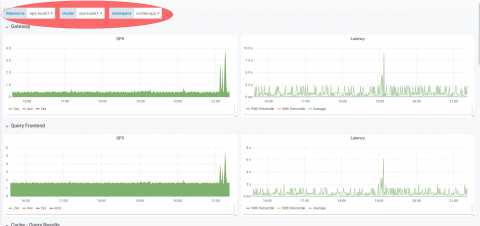
At Grafana Labs, we are always working on optimizing query time on our Grafana Cloud hosted metrics platform, which incorporates our Metrictank Graphite-compatible metrics service, and Cortex, the open source project for multitenant, horizontally scalable Prometheus-as-a-Service.

Speed and Quality are Not Mutually Exclusive: Telemetry is the Key

All engineering teams strive to build the best product they can as quickly as possible. Some, though, stumble into a false dichotomy of choosing between speed and quality. While that choice may have been necessary in the past, it’s not the case today. What I’d like to do in this article is explain why.

Combating threats with UEBA: Health is wealth

In this four-part series, Combating threats with UEBA, we explore hypothetical cyberattacks inspired by real-life events in four different industries: healthcare, finance, manufacturing, and education. We’ll take a look at unforeseen security attack scenarios, and discover how user and entity behavior analytics (UEBA) can be leveraged to safeguard organizations.

CI/CD for Microservices Best Practices on DevOps.com

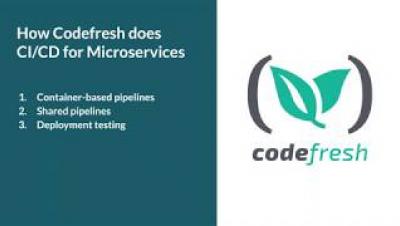
You have finally split your big monolith into microservices. Now what? How do you validate a more complex application? And how do you make it scale? Instead of having one CI/CD pipeline, you have multiple. And as the number of microservices increases so does the number of pipelines. Managing pipelines for microservice applications can quickly get out of hand, especially when you try to reuse common pipeline parts between different applications.

Why you should be using Multi-Stage Docker Builds in 2019

Docker multi-stage builds were announced 2 years ago, but sadly not all developers are using them. Using multi-stage builds can result in a much more secure and smaller Docker image. In some cases, you can take a Docker image from 700MB to 20MB, which makes a big difference in the context of CI/CD. In this webinar, we will see how to use multi-stage Docker builds and the best practices around them.