Analyzing Data Using Serverless
The word serverless starts to become a hot topic in the world of Computer Programming. Maybe you heard the word Serverless a couple of times, either by going to conferences or by talking with other people.


The word serverless starts to become a hot topic in the world of Computer Programming. Maybe you heard the word Serverless a couple of times, either by going to conferences or by talking with other people.
Have you ever wanted to get important alerts from Azure Monitor notified on your smartphone and have all the important details of the problem at your fingertips? Have you ever missed the option to easily change the status of alerts from Azure Monitor in the Azure smartphone app? Ever missed a push notification because there was no persistent and advanced alerting? Then this article is for you.
IBM recently announced an expanded Cloud Paks offering with LogDNA. With this offering, developers and engineering teams can easily aggregate and search huge volumes of data from any source to gain real-time insights on their applications. LogDNA is now offered by IBM and deployable on-premise or multi-cloud with all IBM Cloud Paks including Cloud Pak for Applications, Cloud Pak for Data, Cloud Pak for Integration, Cloud Pak for Multi-cloud Management, and Cloud Pak for Automation.
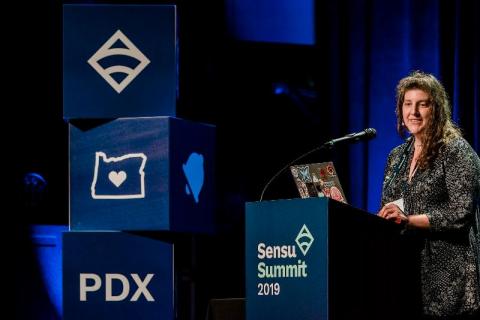
Sensu Summit 2019 featured talks from the Sensu Community, including Harvard University SRE Molly Duggan, who shared how the Harvard FAS Research Computing Department uses CI/CD pipelines and the Sensu Go API to automate monitoring for their highly complex infrastructure.
I never thought that this would be my life. For more than a year, I’ve been talking to individual customers and getting inspired by their stories, challenges, and goals. Now, I have the spectacular opportunity to meet entire conference rooms of people who are excited to hear about my story, challenges, and goals. This is my time to give back to the types of users who have inspired me ever since I entered the serverless space.
Any search engine needs to be be able to parse language. As the field of natural language processing (NLP) has grown, specific text analysis has been applied to stop words and tokenizing (or marking) them by part of speech. In Elasticsearch (and elsewhere), the most attention has been paid to English, although the ELK stack has built-in support for 34 languages as of this writing.
Today is an exciting day for Loki, as we have decided it’s time for Loki to graduate out of beta and into a 1.0.0 GA release! It’s been just about a year since we announced Loki at KubeCon + CloudNativeCon North America in Seattle, and in that time over 137 contributors have made more than 1,000 contributions. Here’s a look at where the project is today.