Powershell 7
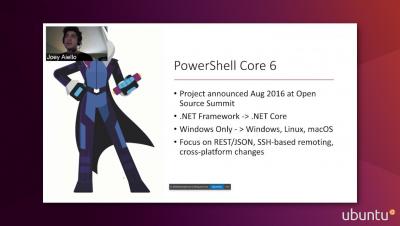
Hear from Microsoft's Joey Aiello on the latest updates on Powershell 7 and how they can support your success in leveraging WSL.


We've all been there. You're clicking around your Rails application, and it just isn't as snappy as it used to be. You start searching for a quick-fix and find a lot of talk about caching. Take your existing app, add some caching, and voila, a performance boost with minimal code changes. However, it's not this simple. Like most quick fixes, caching can have long-term costs.
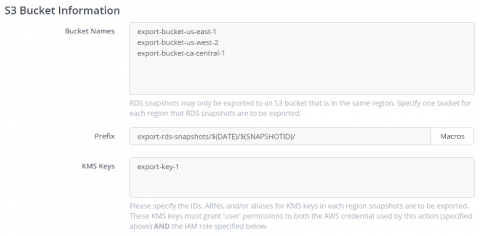
In January, AWS announced the ability to export RDS snapshots to S3. This new feature allows you to export your RDS data to S3 buckets in Apache Parquet format. Today, I’m happy to say that we’ve added a new action to help with this feature: Export RDS Snapshots. This new action will automate the process of exporting RDS snapshots to S3 on a daily basis.
An AWS Auto Scaling group (ASG) is a fleet of EC2 instances that can scale up or down depending on application demand. The elasticity of Auto Scaling groups makes them highly-attractive options for enterprises who do not want to invest in purchasing expensive hardware only to respond to sudden or temporary spikes in application demand.
Designing and maintaining networks is hard. When deploying Kubernetes in your on-prem data center, you will need to answer a basic question: Should it be an overlay network on top of an existing network, or should it be part of an existing network? The Networking options table provides guidelines to choose the right type of networking based on various factors.
One of the exciting things about being a Golang developer today is the strong community that supports the evolution of the language that was developed at Google. The founders of Golang were open to getting engineers involved early-on and the community-centric approach has now become an asset to Go itself.
G2, the largest software marketplace and review platform, recently announced the 2020 winners of its annual Best Software Awards, which recognizes 100 companies globally—and PagerDuty is thrilled to be named the leader in the Best Incident Management category.
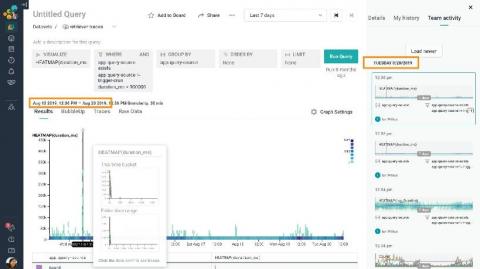
When Charity and I started pitching Honeycomb, we had a “bit” we would do, on the importance of building for teams: I’d identify her as the {Kafka, Mongo, insert tech-of-the-moment here} expert on the team, identify myself as the newcomer, and pantomime awkwardly leaning over her shoulder to see how she debugged some unexpected behavior.
There is an interesting discussion going on around how Serverless is more of a spectrum rather than a binary choice. The move towards the Serverless-end of the cloud spectrum builds upon a decades-old trend, which is why Serverless is here to stay.