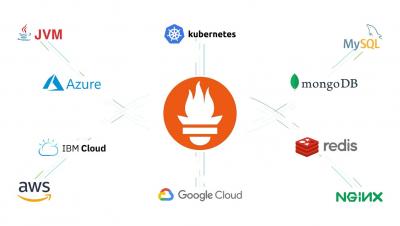
Monitoring services and applications in just a few clicks – that’s the dream of every SRE and developer, but this is very difficult because most applications don’t expose metrics in a standardized format. This article will introduce the current pros and cons of the Prometheus exporters ecosystem and how we leveraged the power of the open-source exporters in Sysdig to radically simplify the user experience to allow you to monitor your applications in just a few clicks.
Last year we cooked a holiday ham using Sysdig. Honestly, just revisiting that makes me hungry, but it got me thinking. What about dessert? Today, I’d like to discuss baking a pie and eating it with Prometheus Remote Write. But not just any pie: a Raspberry Pi. Specifically, I’d like to introduce you to Pi-hole, an open-source project that has become very popular in the community. In this article you’ll learn how easy is Monitoring Pi-hole with Prometheus Remote Write.
We are excited to announce that Prometheus Remote Write functionality is now generally available in Sysdig Monitor. This feature allows Prometheus users to easily push metrics directly from their Prometheus servers to Sysdig’s Managed Prometheus Service. Sysdig Monitor provides not only a scalable long term storage solution for custom metrics but also radically simplifies Prometheus monitoring.
Qovery is a continuous deployment platform. Users deploy apps of all kinds, written in any language and framework they choose. The freedom users have come with a cost for the Qovery core team - the broad scope Qovery has to cover, makes it harder to make the deployment process stable and straightforward for everybody. It's easy to create a service focused on just one language or framework - supporting all of them requires considering many more factors.
Every now and then, issues occur that disrupt the very fabric of global software engineering. Chief amongst them is the recent mass outage of Github. Github is a fundamental building block in software productivity, hosting over 190 million code repositories. Github hosts our code and libraries, runs build pipelines, and much more. It is a central hub of activity and it is consumed by tens of thousands of organizations.