Operations | Monitoring | ITSM | DevOps | Cloud

Building trusted agentic AI in financial services: From data to autonomous action

As financial institutions move from AI experimentation to autonomous operations, trusted context, governance, and observability become the foundation for enterprise-scale Agentic AI. Artificial intelligence in financial services is entering a new era. Historically, financial services companies have focused on deploying generative AI to improve productivity, enhance customer experiences, accelerate software development, and streamline operations.

Don't Leave the Door Open - Keep Your Third-Party Plugins Updated

Yesterday (5 August), the WooCommerce team urged store owners to immediately update the WooCommerce Stripe Gateway following the discovery of a critical security vulnerability in the Stripe for WooCommerce plugin. This is the second urgent security update in less than 30 days, with the previous advisory issued on 14 July. It serves as another reminder that cyber threats evolve quickly, and delaying updates can leave your online store exposed. The lesson isn’t limited to WooCommerce.

What your AI SRE can't see (and what you can do about it)

AI SRE is having a moment. The category pulled in massive funding rounds over the last two years, Gartner published its first market guide, and vendors are promising everything from 90% faster resolution to fully autonomous incident response. If you run an engineering organization, someone has probably pitched you an AI SRE in the last quarter. And let’s be honest: faster triage, less alert fatigue, and automated frontline response are wins for understaffed teams.

Skills as Guardrails: Contributing to Apache Kafka with AI, Without Knowing Every Module

Let me start with something most Kafka contributors think but rarely say out loud: nobody understands all of Kafka. I'm not a core committer and have only contributed a few times, but those contributions I have made have been in part thanks to using coding assistants. There are some issues with this approach though, the Apache Kafka project is huge. It's split into many parts: the core, the server, the client libraries, the streams engine, the storage layer, the consensus code, and more.

When Your SQL Table Outgrows Itself: Lessons from Refactoring at Scale | Harness Blog

At Harness, we build an AI-powered software delivery platform, and test result data is core to how we help engineering teams ship faster. The table that stores it started small: one row per record, all the context right there on the row. Simple, readable, and it worked. Until it didn't. This is the story of how we refactored it, what we learned, and what I'd tell you to watch for in your own systems.

Zero Day to Fix: Why Security Response Speed-Not Discovery-Is Your Real Bottleneck | Harness Blog

Here's the uncomfortable truth about the Mythos era: knowing about a vulnerability and being able to neutralize it are two entirely different problems. AI models like Mythos are finding vulnerabilities 10x faster than humans ever could. Project Glasswing participants discovered over 10,000 high and critical vulnerabilities in their applications. Firefox alone had 271 previously unknown zero-days exposed by Mythos. That's the good news.

Junior developers have one big advantage right now

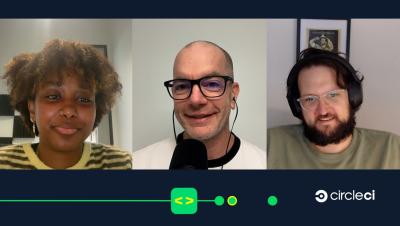
Everyone keeps saying we don't need junior engineers anymore. This episode makes the case that's exactly wrong. Rob sits down with two CircleCI colleagues at opposite ends of the experience spectrum: Hanabel Mengistu, a new grad less than a year into her first engineering role, and Michael Webster, who has been writing software professionally since 2012. Together they explore what it actually feels like to enter the industry right now, when AI has reshuffled the deck for everyone.

How we built an automated debugging workflow at Sentry

AI is going to generate a lot of code from here on out, and a lot of bugs along with it. You already know this. We’ve talked about it before. The bigger challenge is making sure you don’t spend all your time fixing the broken code your agents write. You’re going to need a system that makes it easier to fix those issues for you and fortunately, there are a lot of solutions out there for building automated workflows.

The New MCP Headers Are a Gift to Gateways

In short, buried in the transport section of the MCP 2026-07-28 release candidate are three changes that matter more to infrastructure teams than to anyone else: mandatory Mcp-Method and Mcp-Name headers, cache-control-style ttlMs and cacheScope fields, and standardized W3C Trace Context propagation. Together with the stateless core, they turn MCP from a protocol that gateways had to fight into one that meets them halfway.

Install an AI SRE Agent in Kubernetes with AURA and Helm

AURA does not have to live on your laptop. Install it into the cluster with Helm and it is still there the next time something breaks. AURA is a fully open source AI agent built specifically for SRE work. Rather than one general assistant, you configure workers: separate agent roles, each scoped to a job like inspecting the cluster.