Operations | Monitoring | ITSM | DevOps | Cloud

3 Biggest Myths of Chaos Engineering

Are myths about chaos engineering preventing your team from building more resilient systems? In this video, Matt Schillerstrom, Director of Product Management at Harness and founding engineer of the chaos engineering program at Target.com, breaks down the three most common misconceptions about chaos engineering. Drawing from his experience building large-scale programs, Matt explains how to move past these myths to build confidence in your infrastructure.

Grafana Cloud Demo in Under 5 minutes | Full Stack Observability and more

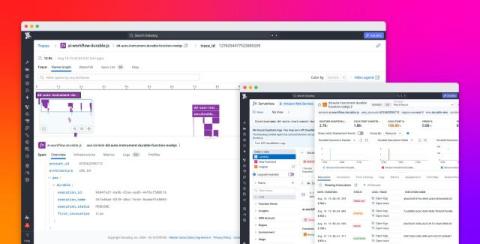
Overview & demo of how Cloud provides an end to end Observability Platform that empowers users who have adopted open standards like or to improve their systems reliability using & a shift left approach with performance testing while optimizing their observability costs.

It's Time to Rethink Untrusted Code in Your Pipeline | Harness Blog

The catastrophic TeamPCP exploit in March 2026 demonstrated that "open execution" models, in which third-party code runs with full privileges, have made CI/CD pipelines a primary target for global credential harvesting. There are better architectures. On March 19th, the risks of running open execution pipelines — where what code runs in your CI/CD environment is largely uncontrolled — went from theoretical to catastrophic.

How to Scale Sandbox Environments with an Internal Developer Portal | Harness Blog

Here's a scenario that probably sounds familiar: a developer needs a sandbox environment to test something. They file a ticket. Then they wait. And wait. Maybe a day goes by, maybe three. Meanwhile, your platform team is buried in provisioning requests, and somewhere, someone has already spun up an unsanctioned workaround that bypasses every governance policy you've put in place. It's a lose-lose. Developers lose velocity, platform teams lose their sanity, and security gaps quietly multiply.

Logging in Next.js is hard (But it doesn't have to be)

A typical Next.js deployment can execute code in up to three different runtimes: Edge, Node.js, and the browser. You may already be capturing logs from server-side code, but if you are not capturing the full request from middleware through server rendering to the browser, you are missing a lot of debugging info when things go wrong. TL;DR: A typical Next.js deployment can run in up to three environments; Node, Edge, and the browser.