Operations | Monitoring | ITSM | DevOps | Cloud

Software Delivery Platform Explained: Key Features and How to Evaluate One | Harness Blog

A software delivery platform is an integrated system that manages every stage of moving software from a code commit to production: continuous integration, continuous delivery, security, and the feedback loops in between. It treats delivery as one governed lifecycle instead of a chain of disconnected steps.

Platform Engineering vs DevOps: How a Software Engineering Platform Unites Both | Harness Blog

DevOps is a culture and practice that gets development and operations teams to collaborate, automate, and ship software faster and more reliably. Platform engineering is the discipline that builds the internal tooling and self-service infrastructure that makes those DevOps practices repeatable at scale. Put simply: DevOps is the goal; platform engineering is one of the most effective ways to reach it across many teams. Your developers are shipping code faster than ever.

What the Platform Team Actually Does When Everyone is an AI-Assisted Builder

An AI model can write a fully functioning microservice in about fifteen seconds. If you hook it up to a pull request pipeline, it can generate migrations, write unit tests, and suggest refactors before your lead engineer has finished their first cup of coffee. We are entering an era of unprecedented code velocity. But code is not an application, and shipping is not operating.

Digital Sovereignty: Is your data really yours?

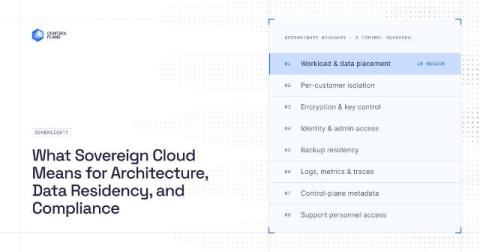
Digital sovereignty is one of the most talked-about terms in cloud and AI right now. But what does it actually mean in practice? Civo Product Director Russ Smith gives his honest take: sovereignty isn't just about where your data is stored. It's about whether someone else can switch it off, access it, manipulate it, or determine what you can do with it. If they can, it's not sovereign.

What is Port Mirroring and How does a SPAN Port Work?

Your dashboard shows every interface green, the counters look clean, and the application owner still insists the network is dropping their transactions. Where do you look next? Availability data tells you a link is up. It cannot tell you what crossed that link or how long the server took to answer. Only the packets carry that, and port mirroring is how most engineers get a copy without cutting into a live cable.

Third-Party Patch Management: How Application Patching Works and Where It Breaks

Most patch programs are built around the operating system. The vendor calendar is predictable and the tooling is mature. That is the smaller half of the job. Most of the software on a typical endpoint comes from somewhere else. Third-party patch management covers that half, and most teams run it with far less structure. The gap is easy to miss in day-to-day reporting. Windows Update finishes on a laptop, and the machine reports as patched. That report covers the operating system and nothing else.

IT Automation: What It Is and How to Get Started

Key Takeaways IT teams are supporting more users, systems, alerts, and services without a matching increase in headcount. Employees also expect immediate support, while businesses want critical services to remain available around the clock. Manual handoffs cannot reliably meet both demands. This guide explains what IT automation includes, how its approaches differ, and how to choose a practical starting point. It also links to deeper resources for each major category.

Investigate account-level churn risk with Product Analytics account segments

An account can show signs of disengagement long before a renewal conversation begins. Users may stop returning to a core workflow, stall during onboarding, or skip a newly released feature. Product teams often see these signals only at the user level, while annual recurring revenue (ARR), plan, renewal date, and ownership data remain in a customer relationship management (CRM) system or data warehouse.

Deploying Apache Kafka Streams next to your data

If you’re using Apache Kafka for data streaming, then you’re likely to want to take data from one topic and write an amended version of that data to another topic, for instance: for filtering (give me the items that have been delivered), enrichment (add some more information to messages, from another data source) or anomaly detection (show me potential signs of trouble). The premier solution in this space is the Apache Kafka Streams library.

Resolve Now Fixes Your Errors, Not Just Diagnoses Them

Your error monitoring tool found a bug. Now what? For most teams, the answer is the same thing it has been for years: copy the stack trace, find the file, read the code, build a mental model of what went wrong, write the fix, write or update a test, push, and wait for CI. That process hasn’t changed much since error tracking became a category. The tools got better at telling you something broke. They never got better at fixing it.