Following another successful PagerDuty Summit, development continues across several areas of the product. We’re excited to announce a new set of updates and enhancements to the PagerDuty Operations Cloud. Recent updates from the product team include Incident Response, PagerDuty® Process Automation and PagerDuty® Runbook Automation, Partner Integrations & Ecosystem, as well as Community & Advocacy Events updates.
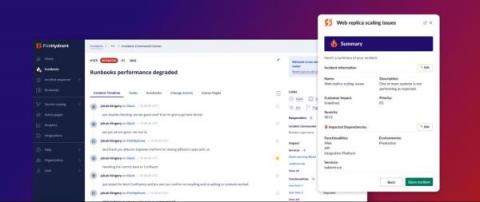
Today we’re releasing fully redesigned Slack and Command Center experiences for FireHydrant so anyone on your team can intuitively navigate the incident response process — in the app or on the web. There are many things you can do ahead of an incident to help things run smoothly: design and document your process, automate predictable steps, train the team, and run drills.
Incident response is at the heart of great, or terrible, user experience. However, while tools have evolved, challenges – especially faced by L1 agents – still exist. The solution isn’t about getting more tools. It’s about establishing a unified platform across the IT service desk and the IT Operations teams that empowers L1 agents to collaborate across silos with L2 agents, subject matter experts, and DevOps personnel.
2020 revolutionized how we work. Many went from full-time office work to 100% remote overnight. And now that in-office is once again on the horizon, companies are thinking of ways to continue to work flexibly. However, this comes with increased challenges, and a need for tools that match this working style. The PagerDuty mobile application is well recognized, with a 4.8 stars rating on the App Store and Google Play.
I recently published a couple of blog posts about what happens when you invest in a thoughtful incident management strategy and three first steps to take to do so. What I’m getting at in these posts is that we need a shift toward proactivity in the software operators community. I’d wager most of the world is responding to incidents as they happen, and nothing more.
With cybersecurity boundaries going beyond the traditional walls of an office and attack surfaces constantly expanding, data breaches are inevitable. Managing risks from data breaches requires organizations to develop a comprehensive incident response plan – an established guideline that facilitates incident detection, response and containment, and empowers cybersecurity analysts to secure a company’s digital asset.
Service ownership is a DevOps best practice where team members take responsibility for supporting the software they deliver at every stage of the development lifecycle. This level of ownership brings development teams much closer to their customers, the business, and the value being delivered. Service owners are the subject matter experts (SMEs) for their services – and in a service ownership model, they are also responsible for responding to any production issues.
Last November, we announced the launch of Grafana OnCall, an easy-to-use on-call management tool that helps reduce toil through simpler workflows and interfaces tailored for developers. Born out of Grafana Labs' acquisition of Amixr Inc., Grafana OnCall began as a cloud-only solution that became generally available to all Grafana Cloud users, on both paid and free plans, in February.
Delivering dependable and high-performing IT services in 2022 requires coordination and collaboration across different workflows, areas of expertise, and even time zones. Whether serving in-house colleagues or external clients, there is immense pressure on IT management to create seamless experiences 24/7/365. Seconds matter when critical systems break down, and slow incident resolution can have costly ramifications on customer experience and employee productivity.