Ask Grot: How we're building a chatbot that's actually helpful on our website
What is Grafana? How do I change the color of a panel set? Where can I find all public dashboards? Who made the Kessel Run in less than 12 parsecs?


What is Grafana? How do I change the color of a panel set? Where can I find all public dashboards? Who made the Kessel Run in less than 12 parsecs?
Today, we announce a revolutionary new product that will put an end to recurring, complex IT issues and deliver continuous engineering with full scale, start-to-finish automation for EUC teams.
This release of the collection will feature a whole set of possibilities to deploy a complete Icinga 2 environment. Before diving deep into the collection, a quick recap of all roles which were available and which are included in the current release v0.3.0. New Roles in v0.3.0 To further enhance the Icinga 2 installation process via Ansible those roles are vital for a successful deployment. The Icinga DB is the future backend of Icinga 2, this can be handled with our icingadb and icingadb_redis roles.
DX Unified Infrastructure Management (DX UIM) is a powerful solution that enables comprehensive infrastructure observability across your digital ecosystems, including private, public, and hybrid clouds. With DX UIM, you can proactively and efficiently manage the performance and availability of your IT infrastructure and applications. DX UIM 20.4 is the current main branch of the solution. This release offers a number of significant capabilities that weren’t available in earlier versions.
If generative AI is innovative for enterprises in 2023, being cloud-based is ubiquitous. What that means is that the data today is extremely voluminous and complex. Not to mention that all that data needs proactive monitoring and analysis. Thus, data in observability and monitoring can often be complex and challenging to understand due to its sheer volume and diversity.
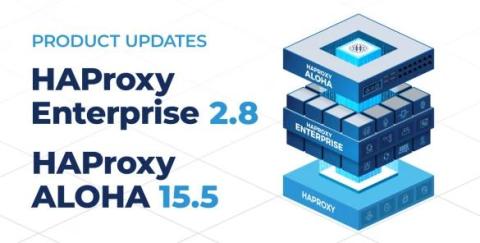
HAProxy Enterprise 2.8 and HAProxy ALOHA 15.5 are now available. Users of our enterprise-class software load balancer and hardware/virtual load balancer appliance who upgrade to the latest versions will benefit from all the features announced in the community version, HAProxy 2.8, plus some features that enhance the flexibility of our enterprise security options to meet even more use cases.