In this article, we’ll learn about the Elasticsearch flattened datatype which was introduced in order to better handle documents that contain a large or unknown number of fields. The lesson examples were formed within the context of a centralized logging solution, but the same principles generally apply. By default, Elasticsearch maps fields contained in documents automatically as they’re ingested.
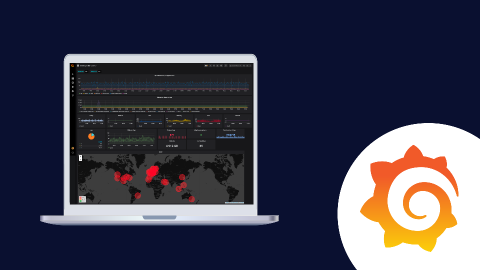
One of the most common dashboards for metric visualization and alerting is, of course, Grafana. In addition to logs, we use metrics to ensure the stability and operational observability of our product. This document will describe some basic Grafana operations you can perform with the Coralogix-Grafana integration. We will use a generic Coralogix Grafana dashboard that has statistics and information based on logs. It was built to be portable across accounts.
In this webinar, you'll learn:
We’re back with part two of our three-part blog series on living-off-the-land attacks. If you missed part one, you can read it here. In a nutshell, living-off-the-land (LOTL) refers to a type of attack where the attacker uses the tools and features that already exist in the target environment to carry out malicious activities. The concept of LOTL is not new, but LOTL and file-less attacks have been gaining popularity over the last few months.
Dashboards should be easy to build and provide powerful insights. Our magic dashboards are already created automatically, so you don’t have to spend any time setting up these dashboards yourself. Many developers started tracking custom metrics that were unique to their applications. From these metrics, you can create custom dashboards and add triggers to get notified if values go outside of your desired range.