The latest News and Information on Monitoring for Websites, Applications, APIs, Infrastructure, and other technologies.
When browsing the web, you may have come across error messages such as "404 Page Not Found" or "500 Internal Server Error." These error messages are HTTP statuses, which are an essential part of the internet's communication protocol. In this article, we'll cover the most common HTTP statuses and what they mean.
The ability to continue business operations for the foreseeable future is a key metric from a financial standpoint. But from a risk management perspective, all dimensions of an organization’s strategic and operational framework must be analyzed in order to… The last part relates to business resilience — and it’s what we’re going to explore here. (This article was written by Joseph Nduhiu. See more of Joseph’s contributions to Splunk Learn.)
In today’s fast-paced world, app performance equals brand reputation. Customers expect apps that are fast, responsive and available 24/7. That’s where Application Performance Monitoring (APM) comes in. The technology enables businesses to ensure the best possible user experience by monitoring and managing the performance of their applications. But as applications become increasingly complex, identifying and resolving performance issues in real-time becomes increasingly difficult.
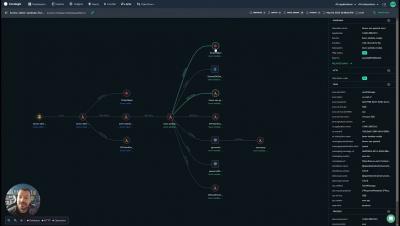
For a long time at Honeycomb, we envisioned using the tracing data you send us to generate a service map. If you’re unfamiliar, a service map is a graph-like visualization of your system architecture that shows all of its components and dependencies. We didn’t want it to be a static service map, though—the kind you’d view once before going “huh, neat”—and then never looking at it again.