The New Standard of Log Management and Analytics
Store Everything, Ask Anything.


The latest News and Information on Log Management, Log Analytics and related technologies.
Developer teams and even operational teams often ignore monitoring applications. Deadlines, inexperience, company culture, and management can lead to poor or neglected monitoring inside developing platforms. Automating all monitoring tasks is an excellent way to avoid this scenario. Automation leads to lower costs, less time spent solving issues, and more efficient teams.
In our last post, we covered CloudWatch Metrics in a great deal of detail. We looked at how we can use it to monitor the health of our Lambda functions, including setting up service dashboards as well as alerts. In this post, we will focus on its sister service – CloudWatch Logs. We’ll see how it works and how to get the most out of it.
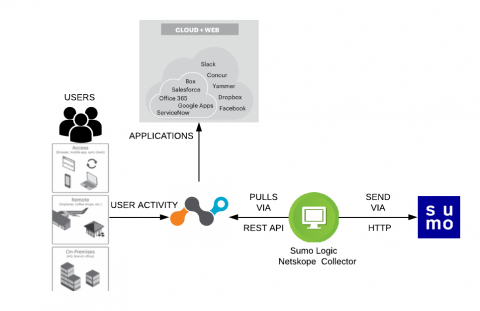
As the worldwide spending on SaaS spending will make up more than half of all public cloud services spending through 2019, it is critical to have end-to-end visibility into threats across your SaaS and on-premise applications. Sumo Logic and Netskope are collaborating on a technical integration that will help joint customers use Sumo Logic to correlate, validate and investigate Netskope alerts into their overall security incident investigation process and understand SaaS application usage patterns.
As if the temperature this summer was not high enough, this new major release of the Elastic Stack promises turns it up a notch with some hot new features. Bundling new ETL capabilities in Elasticsearch, a bunch of improvements in Kibana and a lot of new integration goodness in Filebeat and Metricbeat, Elastic Stack 7.3 is worth 5 minutes of your time to stay up to date.