Operations | Monitoring | ITSM | DevOps | Cloud

The latest News and Information on Log Management, Log Analytics and related technologies.

Apache Kafka Consumer Lag Monitoring

The world lives by processing the data. Humans process the data – each sound we hear, each picture we see – everything is data for our brain. The same goes for modern applications and algorithms – the data is the fuel that allows them to function and provide useful features. Even though such thinking is not new, what is new in recent years is the requirement of near-real-time processing of large quantities of events processed by our systems.


Kubernetes Incident Response Best Practices

Inevitably, organizations that use technology (regardless of the extent) will have something, somewhere, go wrong. The key to a successful organization is to have the tools and processes in place to handle these incidents and get systems restored in a repeatable and reliable way in as little time as possible.

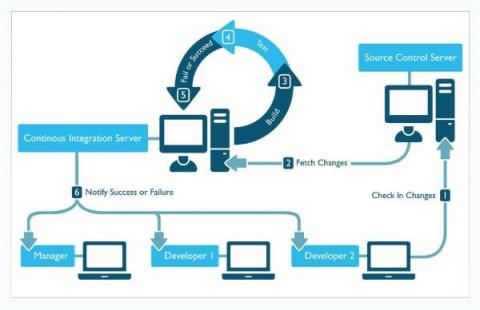
CI/CD & DevOps Pipeline Analytics: A Primer

Tracking application-level and infrastructure-level metrics is part of what it takes to deliver software successfully. These metrics provide deep visibility into application environments, allowing teams to home in on performance issues that arise from within applications or infrastructure. What application and infrastructure metrics can’t deliver, however — at least not on their own — is breadth.

Real User Monitoring vs Synthetic Monitoring Comparison: What Should You Use? | Sematext

What is a real user monitoring tool? and what is a synthetic tool? Which monitoring tool do you really need? In this comparison video, we will look at the pros and cons of monitoring your site with synthetic vs. real user monitoring tools. Ultimately, we will see that these two technologies work together to ensure that your website runs well and is optimized for the end-user.

Elastic on Elastic: How we saved $100,000/month by keeping our own software up to date

Let's start with the bottom line: When we upgraded to Elasticsearch 7.15 last year, our internal observability clusters saw a reduction in inter-node traffic from 464TB to 204.5TB per day. We monitored this reduction through subsequent upgrades and noticed its impact on our data transfer and storage costs. So here it is: upgrading saved Elastic $3,500 per day, or approximately $100,000 a month, or $1.2 million annually.

Slack's New Logging Storage Engine Challenges Elasticsearch

Elasticsearch has long been the prominent solution for log management and analytics. Cloud-native and microservices architectures, together with the surge in workload volumes and diversity, have surfaced some challenges for web-scale enterprises such as Slack and Twitter. My podcast guest Suman Karumuri, a Sr. Staff software engineer at Slack, has made a career on solving this problem. In my chat with Suman, he discusses for the first time in a public space a new project from his team at Slack: KalDB.

C-Suite Reporting with Log Management

When security analysts choose technology, they approach the process like a mechanic looking to purchase a car. They want to look under the hood and see how the product works. They need to evaluate the product as a technologist. On the other hand, the c-suite has different evaluation criteria. Senior leadership approaches the process like a consumer buying a car.

Using AI & ML for Application Performance (APM)

Today, IT and site reliability engineering (SRE) teams face pressure to remediate problems faster than ever, within environments that are larger than ever, while contending with architectures that are more complex than ever. In the face of these challenges, artificial intelligence has become a must-have feature for managing complex application performance or availability problems at scale.

Cloud Log Management Strategy & Best Practices

For IT Operations and Site Reliability Engineering (SRE) teams, logging is nothing new. In fact, collecting and analyzing logs is one of the oldest cornerstones of performance management. Logs have been part and parcel of APM workflows for decades. Yet the logging strategies that worked in eras past often fall short today. That’s thanks to the advent of cloud-native computing, which has ushered in fundamental new challenges in the way teams aggregate, analyze, and manage logs.