Operations | Monitoring | ITSM | DevOps | Cloud

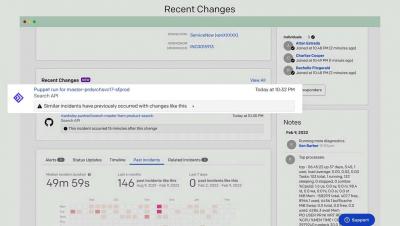
How Sleuth measures Change Lead Time

Change Lead Time can be considered the most insightful of the four DORA metrics. But how do you measure it most accurately? In this video, Don Brown shows you how Sleuth measures Change Lead Time for code changes and how Sleuth breaks down that time into multiple buckets for the most detailed insight on what's slowing your team down. Check out these videos on how Sleuth measures other DORA metrics.


How Sleuth measures Change Failure Rate

Before you can measure the DORA metric for Change Failure Rate, you need to define what failure means. In this video, Sleuth's CTO Don Brown explains how Sleuth defines and measures Change Failure Rate, and how it ties failure back to deployments. Check out these videos on how Sleuth measures other DORA metrics: Give Sleuth a try and see why it's a deploy-based Accelerate / DORA metrics tracker both managers and developers love.

How Sleuth measures Mean Time to Recovery (MTTR)

The DORA metric Mean Time to Recovery (MTTR) tracks how long on average your failure spans are. In this video, Sleuth CTO Don Brown explains how Sleuth calculates this measurement, which gives you insight on how quickly your team can respond to and recover from failure. Check out these videos on how Sleuth measures other DORA metrics: Give Sleuth a try and see why it's a deploy-based Accelerate / DORA metrics tracker both managers and developers love.

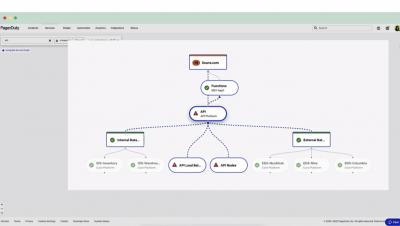
PagerDuty Incident Response Demo (Extended)

Enjoy this demo that showcases a day in the life of a team handling an incident with PagerDuty's Automated Incident Response solution. PagerDuty enables teams to orchestrate the right response for every incident. It also helps organizations protect revenue and improve customer experiences by resolving critical incidents faster and preventing future occurrences. Now you can bring major incident best practices to your organization with end-to-end response automation and friction-free postmortems.

How to launch Confidential VMs on Azure

Canonical is happy to announce the general availability of Ubuntu Confidential VMs (CVMs) on Microsoft Azure. Ubuntu 20.04 is the first and only Linux distribution to support Confidential VMs on Azure! Ubuntu CVMs use the latest security extensions of the third generation of AMD CPUs, Secure Encrypted Virtualization-Secure Nested Paging (SEV-SNP). As such, they bring about a fundamental shift in the traditional threat model of public clouds. They are part of the Microsoft Azure DCasv5/ECasv5 series, and only take a few clicks to enable and use!