Operations | Monitoring | ITSM | DevOps | Cloud

The Race to MEC-anize the Mobile Network

Mobile network operators (MNOs) continue to show confidence in the potential of Multi-Access Edge Compute (MEC) and a more open 5G network. At the same time, they face new challenges working in an open ecosystem. MNOs are uniquely positioned to deliver on the full promise of edge computing with end-to-end applications, public cloud infrastructure and hybrid network deployments. In this webinar, you will learn how MNOs can maximize network investments and unlock new revenue streams by leveraging a combination of analytics, orchestration and MEC applications.

Cloud 66 Feature Highlight: Multi Database Support

Many applications use multiple types of datastores simultaneously - mixing SQL and NoSQL databases, for example. Or your application might need two separate clusters of the same database engine to handle an upgrade, or to support separate services. This is where Multi Database Support comes handy. What is Multi Database Support? Multi Database Support makes it possible to attach more than one database group to your application.

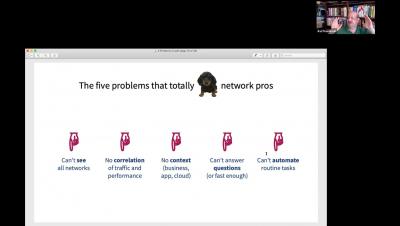
Five Problems Your Current Network Monitoring Can't Solve but Network Observability Can

Public and hybrid cloud has led to a new era of agility, scale and performance, particularly for the networking that underlies enterprise applications. Yet, more than 80% say their network monitoring hasn’t kept up with major problems that need to be solved. A new approach is required – it’s network observability. Join Kentik co-founder and CEO Avi Freedman as he discusses how to reduce networking issues and risks while continuing to allow your organization to innovate at the speed of cloud.

When Disaster Strikes: Ensuring Your DRP Actually Works

Black swan events are inherently unpredictable—you can’t prepare for every possible threat. Instead, you must identify the ways systems can fail and develop strategies to restore them to full service when these failures happen. But a disaster recovery plan (DRP) can’t be relied on until it’s been proven to work. The use of Chaos Engineering allows you to test your DRP much more safely and predictably than you could otherwise.

SRE's Guide to Chaos & Observability

Today’s distributed, cloud-based environments are incredibly complex. Not only does each component depend on many others, but modern systems are also highly dynamic—changing frequently as teams push new code or make updates to infrastructure. Taming this complexity to ensure reliability requires end-to-end observability to understand how components depend on each other. Additionally, proactive Chaos Engineering combined with AI-driven observability lets you uncover “unknown unknowns” that impact how your system will respond to different failure scenarios.