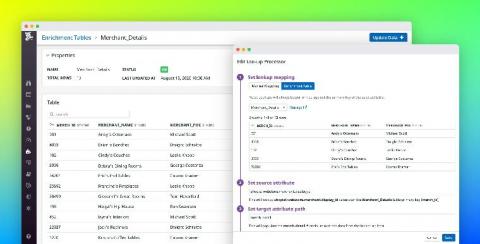
Version 2.0 of the HAProxy Data Plane API brings some exciting enhancements that unlock the power of HAProxy’s flexible configuration and its runtime capabilities. The HAProxy Data Plane API, which lets you manage your HAProxy configuration dynamically using HTTP RESTful commands, has marked a major milestone with the release of version 2.0. This release emphasizes the runtime aspects of HAProxy, giving you the ability to manage map files, stick tables, peers, DNS resolvers and more.
Go Module vulnerabilities frustrate the lives of many Go developers and can turn a simple project into a battle of endurance between the dev and their patience. With the process of CI/CD shifting left more and more, it’s becoming even more pertinent for developers to be able to track and report vulnerabilities as early as possible. JFrog GoCenter can help track and mitigate vulnerabilities and make the lives of Go developers easier.
Ever since the beginning of the COVID-19 pandemic and the resulting lockdowns, working from home has instantly become the primary way of work for most people. Even companies that already had functionality in place to work from home were instantly hit by scalability issues. Many of the existing solutions typically weren’t meant to be used for a 100% concurrent remote workforce.
The move to a more hybrid and distributed application architecture has pushed cloud providers to offer higher availability. Availability has become the key differentiator among competitors. The focus on offering higher and higher availability comes at the cost of other vital performance factors such as service reliability. This blog discusses some of the important takeaways from our recent on-demand webcast on improving service reliability.
Lumigo’s System Map is a real-time visualization of your entire application. A bird’s eye view of the whole stack with filters that allow you to drill down into a subset of your infrastructure. Our systems have grown exponentially both in scale and complexity. AWS takes care of scaling automatically, ensuring your application will scale gracefully regardless of the programming language, load, or location.
The catchphrase “shadow IT” has always been a bit misleading in the world of tech support. Is using Dropbox instead of Google Drive akin to committing some seedy act in a dark alleyway? Jokes aside, it seems tech support’s real problem has less to do with terminology and more to do with the way they approach shadow IT. Their aim is often near-sighted because their tools hold them back.
Worldwide there are 5 billion searches a day, of which Google processes 3.5 billion, or 40,000 per second. More than half of web searches now come from a mobile phone, and this trend is not limited to consumers; businesses are also being impacted. ServiceNow customers, partners, and employees are searching for relevant information, both on their desktops and on mobile devices, to self-solve their own issues.
Week 2 at Knowledge 2020 covered a lot of ground—from Marcus Torres’ CreatorCon keynote to eye-opening sessions from customers, including Chevron (with an ITSM turnaround tale) and Under Armour (with a PPM success story). Here are just a handful of the week’s highlights.
The Splunk App for Infrastructure (SAI) has changed the game when it comes to IT Operations monitoring and alerting of metrics and logs. The App provides a uniform and dynamic overview dashboard, and an analysis workspace for a simple method to work with metrics.