Operations | Monitoring | ITSM | DevOps | Cloud

How to visualize user journeys with Site24x7 to spot opportunities to improve the UX

Before judging anyone, walk a mile in their shoes. This is a great idiom that emphasizes the importance of experiencing what your customers experience when you offer a service. With empathy, IT product owners can ensure that their operations take into account user journeys to be responsive and responsible.
Ensuring Optimal Kubernetes Cluster Health with Calico Observability

Have you ever wondered how to navigate the complexities of managing Kubernetes clusters effectively? Observability is the key, and Elasticsearch plays a pivotal role in storing and analyzing the critical data that keeps your systems running smoothly.

The AI Model Showdown - LLaMA 3.3-70B vs. Claude 3.5 Sonnet v2 vs. DeepSeek-R1/V3

Following all the hype and bluster with DeepSeek’s arrival in the AI landscape––and its ability to crash the poster child of AI’s share value overnight (Nvidia), we wanted to conduct a rigorous evaluation at Komodor. We tested DeepSeek’s models head-to-head against industry leaders in solving real-world Kubernetes challenges.

Automated incident response: Why it matters and where it's headed

Incidents happen. Whether it’s a service outage, degraded performance, or an unexpected spike in errors, things will go wrong. The question isn’t if incidents will occur—it’s how quickly and effectively you can respond when they do. For years, incident response has been a mostly manual process: someone gets paged, scrambles to investigate, loops in the right people, and after some firefighting, hopefully resolves the issue before too many customers notice.

From Datadog to Grafana Cloud: Why companies migrate and how it changes business for the better

“Impossibly expensive.”“Generic database metrics.”“Exceeding limits.”“No transparency.” These are the words our customers use to explain why they looked for a Datadog alternative and migrated onto Grafana Labs’ observability solutions. Grafana Cloud provided the scalability that LexisNexis Risk Solutions needed to migrate acquired companies into a unified observability platform. “We’ve had migrations from Datadog.

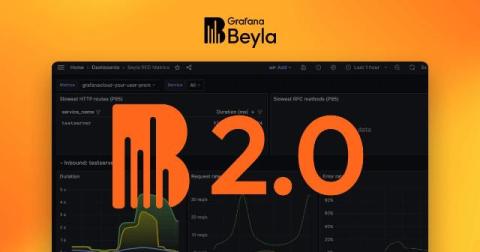
Grafana Beyla 2.0: distributed traces, scalable Kubernetes deployments, and more

In November 2023, we released Grafana Beyla 1.0, the first major milestone in our pursuit of zero-code (and zero-effort) eBPF instrumentation. We delivered a way — through a single command-line — to automatically instrument any application supporting HTTP/gRPC protocols, as well as provide basic network packet flow information.

New Relic vs Kibana: A Guide to Choosing the Right Tool in 2025

New Relic and Kibana are popular monitoring and observability tools that provide a wide range of features for analysing and visualizing data. In this post, I have compared New Relic and Kibana based on key aspects such as data ingestion, dashboards and visualizations, log management, alerting, pricing and more. Lets take a look at each tool's capabilities, strengths, and weaknesses to help you understand how they differ and which one is best suited to your needs.

Stop Logging the Request Body!

With more and more people adopting OpenTelemetry and specifically using the tracing signal, I’ve seen an uptick in people wanting to add the entire request and response body as an attribute. This isn’t ideal, as it wasn’t when people were logging the body as text logs. In this blog post, I’ll explain why this is a bad idea, what are the pitfalls, and more importantly, what you should do instead.

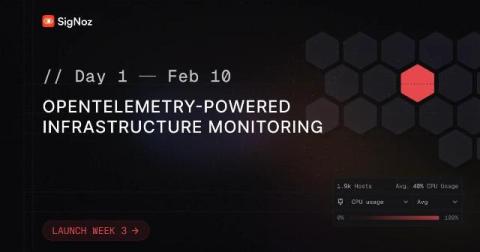
OpenTelemetry-Powered Infrastructure Monitoring

Today, we’re excited to announce a much-awaited feature in SigNoz: Infrastructure Monitoring, built natively on OpenTelemetry. Infrastructure monitoring is a critical aspect of modern observability. Without proper visibility into your infrastructure resources, troubleshooting issues, optimizing costs, and maintaining performance become challenging.

The Ultimate Guide to OpenTelemetry Visualization

Modern software systems are complex, with multiple services interacting across different environments. Understanding how they behave—tracking performance, identifying bottlenecks, and diagnosing failures—requires more than just collecting data. OpenTelemetry provides a standardized way to gather logs, metrics, and traces, but the real value comes from making that data easy to interpret through visualization.