Operations | Monitoring | ITSM | DevOps | Cloud

Cloud Computing in Healthcare: Ensuring Secure and Scalable Medical IT Infrastructure

Cloud computing has transformed healthcare by providing a secure, scalable, and efficient IT infrastructure. With the increasing need for data management, interoperability, and cost reduction, cloud-based solutions have become essential for healthcare providers, laboratories, and private practices. This article explores the impact of cloud computing on healthcare, its benefits, security considerations, and its role in Private Practice Billing Services, Laboratory Billing Services, and Patient Management Software.


AI-Driven Healthcare: How AIOps is Revolutionizing Medical IT Operations

The healthcare industry is undergoing a massive digital transformation, driven by artificial intelligence (AI) and automation. Among the most promising innovations is Artificial Intelligence for IT Operations (AIOps), which is reshaping how medical IT infrastructures are managed. From private practice billing services to laboratory billing services and patient management software, AIOps is bringing efficiency, accuracy, and cost savings to healthcare organizations.

How Cloud-Based Technology Is Streamlining Telemarketing Operations

Telemarketing remains one of the most effective ways to reach potential clients, especially in industries like B2B. However, as businesses evolve and technology advances, it's essential to adopt new tools that can enhance efficiency and improve results. Cloud-based technology is one such tool, transforming how telemarketing operations are conducted by offering features that streamline processes, enhance data management, and improve customer interaction. Here's how cloud-based technology is revolutionising telemarketing and helping businesses unlock new levels of efficiency.

How to Switch to Windows 11 Pro: A Step-by-Step Guide

Windows 11 was officially released on October 5, 2021. Many users have already experienced Microsoft's new operating system. However, what should you do if your computer has the Home version installed, but you want to download Windows 11 Pro to take advantage of all the features in the Pro edition? We will discuss this topic today.

Future-Proofing Your Network: A Deep Dive into Software-Defined WAN Technology

As businesses continue to scale and adopt innovative technologies, the need for robust network solutions becomes paramount. Software-defined WAN (SD-WAN) technology emerges as a significant advancement, providing organizations with agility, improved performance, and cost-effective management. Unlike traditional networks, which often become cumbersome as they expand, SD-WAN enables seamless connectivity across various locations while optimizing bandwidth usage.

NiCE VMware Management Pack 5.8

Great news for all VMware users! NiCE just rolled out VMware Management Pack 5.8 for Microsoft SCOM, bringing full support for VMware vSphere 8.0.1, 8.0.2, and 8.0.3. This update keeps your monitoring sharp and up-to-date with the latest VMware environments. Plus, we’ve polished up the docs to make life easier. If you’re an existing customer, this update is ready for you! Stay ahead of the game and keep your virtual environments running smoothly!

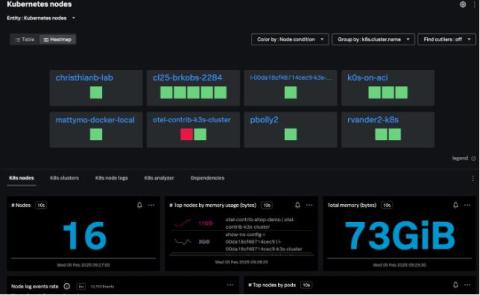
How To Monitor Kubernetes with Splunk Infrastructure Monitoring

Kubernetes is the standard for orchestrating containerized microservices — but it can present some monitoring challenges. Luckily, we’ve already covered why monitoring Kubernetes is a must-do, the basics of how to do it, and the options you have for collecting monitoring data from a K8s environment.

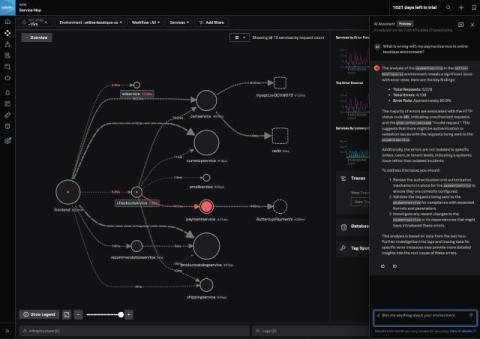
Solve Problems Faster with New, Smarter AI and Integrations in Splunk Observability

As businesses scale across hybrid and multi-cloud environments and integrate AI-powered technologies, complexity grows — and with it, the risk of performance degradation and cost of downtime. To avoid facing customer-impacting IT issues, organizations need better ways to correlate data across environments, detect anomalies before they escalate, and resolve incidents more efficiently. That’s where Splunk and Cisco come in.

Guide to unit testing

Unit testing is a software testing methodology that tests the behavior of individual functional units of code. Through unit testing, developers can verify that their code performs as intended. Providing an opportunity to catch bugs, validate the implementation of logic, and assess the quality of the code, unit testing enhances the quality of applications and preemptively identifies problems before they become major issues.