Operations | Monitoring | ITSM | DevOps | Cloud

The Growing Importance of Protecting and Storing Digital Data

Every modern operation relies on digital files to function smoothly every day. Losing access to customer records creates immediate chaos for any team. Modern networks face constant threats from hardware failures and malicious external actors. Organizations must build reliable habits to shield their information before problems occur.
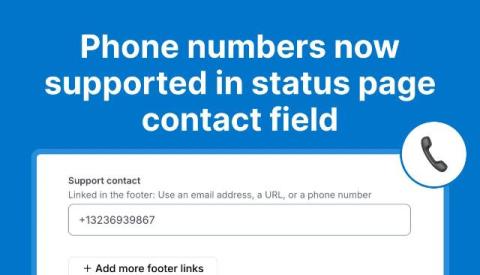
Phone numbers now supported in status page contact field

We’ve rolled out a small but useful improvement to the Status Page → General settings. Previously, the Support contact field in the footer only accepted: Based on feedback from our users, the field now also supports phone numbers. Status pages in StatusGator already offer a variety of customization options – including custom branding, layouts, monitor visibility, subscriber settings, and privacy controls.

Konstruct product updates: Global resources, MCP support, and smarter permissions

May has been one of our busiest months yet for Konstruct. Across three releases, 0.5, 0.5.1, and 0.5.2, we've shipped some of the most requested platform-level changes since we launched: a unified model for sharing resources across organizations, native support for AI-driven workflows via MCP, a completely redesigned API keys experience, and a cleanup to how permissions actually work in multi-org environments. Let's walk through what shipped and why it matters.

I thought I invented this. Then I opened TikTok

The video was a product manager who claimed she worked at Netflix. (Her claim, not mine. I have no way of verifying it, and I can’t find the video now.) She was talking about how Netflix now requires every PM to vibe code a working prototype before presenting an idea to engineering. Show, don't spec. Build the thing first. I sat there for about ten seconds being mildly annoyed.

How a unified data model improves feature flag rollout decisions

Consolidation is reshaping the experimentation and feature management landscape. Tools are merging, and partnerships are being repackaged as platforms. But marketing a unified experience is not the same as building one. Right now, engineering leaders and product managers are reassessing whether the tools they depend on are built for the long term. It’s irrelevant which vendor has the most products.

Monitor LLM routing with the Kubernetes Inference Extension

If you serve LLMs on Kubernetes without inference-aware routing, your load balancer is likely wasting inference capacity. Generic HTTP traffic management blindly routes requests, assuming the backends in your cluster are interchangeable. But your model-serving backends are stateful and unevenly prepared to handle any given request. As a result, requests are often routed to the backend that’s not the one best suited to respond.

Why Shared Context Matters in Hybrid Cloud Operations

The first post in this series explored why traditional observability breaks down in hybrid cloud environments. As infrastructure, applications, and dependencies stretch across on-premises networks and cloud services, isolated monitoring views leave teams with an incomplete understanding of what is happening and why. That challenge raises the next question: what kind of operational model actually works in a hybrid environment?

Stop pushing broken code to CI: Wire Chunk sidecars into agent hooks

AI agents can write code faster than any developer. But for most teams, the feedback loop hasn’t kept pace. The agent generates code, pushes it to CI, and minutes later a full pipeline run catches a simple linting error or a failing unit test. By then the agent has moved on. Getting back to a working state means rebuilding context from scratch and burning tokens just to fix something that should never have shipped in the first place.

Keep ArgoCD. Get Qovery. ArgoCD Integration Is Here.

Moving to a new platform shouldn't mean weeks of migration work before you see any value. Qovery now lets you connect your ArgoCD server and manage your existing applications directly alongside your Terraform modules, lifecycle jobs, and Qovery-native services, from a single control plane. Alessandro leads product at Qovery. He drives the changelog, roadmap, and product strategy - turning customer feedback into platform capabilities.