Operations | Monitoring | ITSM | DevOps | Cloud

Optimizing a Golang service to reduce over 40% CPU

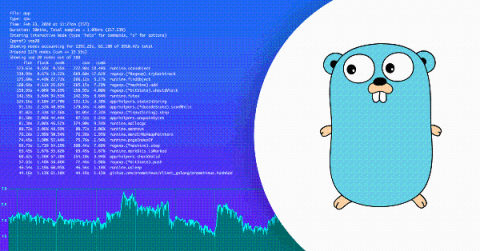
10 years ago, Google was facing a critical bottleneck caused by extremely prolonged C++ compilation times and needed a totally new way to solve it. Google engineers tackled the challenge by creating a new language called Go (aka Golang). The new language of Go borrows the best parts of C++, (most notably it’s performance and security features) and combines it with the speed of Python to enable Go to quickly use multiple cores while being able to implement concurrency.

How much does a status page cost?

Keeping your customers informed of the status of your website, application, or service is essential nowadays. If you don’t have a status page to communicate this, you’re missing an opportunity to improve transparency and reduce customer support burden. This is especially true if you are running an online business and your website is your main source of income, a status page is crucial not only for your business but for your customers as well.

Introduction to Helm 3 the Package Manager for Kubernetes

Helm is the package manager for Kubernetes (like yum, apt and home brew ) that allows easily package, configure, and deploy applications onto Kubernetes clusters. Helm charts are packages (like debs and rpms) It contains pre-configured kubernetes resources such as ConfigMaps, Deployments ,StatefulSet manifests, PersistentVolumes and editable settings for them.

5.4 Million Customers Risk Credit Card Theft with Khaadi

During research into client side attacks, we recently observed a skimmer loading on the popular Pakistani fashion website, Khaadi. Khaadi is a global brand including seven stores in the UK and the company boasts over 5.4 million followers on social media. Khaadi have faced negative press recently, after an uproar about inhuman workplace conditions in 2017, and narrowingly avoiding going into administration in 2019.

Integrating Palo Alto with Logz.io's Cloud SIEM

First things first, why would you want to collect logs from Palo Alto and send them to a Cloud SIEM? There are many reasons. At its core, having a centralized location with a consistent user experience for managing alerts, notifications, and information coming from the technologies securing your environment can provide value in a lot of ways. In this blog, we’ll discuss how to collect, parse, and analyze Palo Alto logs in Logz.io Cloud SIEM, and how it can help secure your cloud workloads.

The GitOps Kubernetes Connection

In the first article in this series, we talked about making Kubernetes essential to your DevOps pipeline. We reviewed CI/CD and DevOps and why their relationship with Kubernetes is so powerful. In this article, I’m going to dive into another term in the application development and management mix: GitOps. We’ll cover what GitOps is, how it affects an organization and how it aligns with Kubernetes.

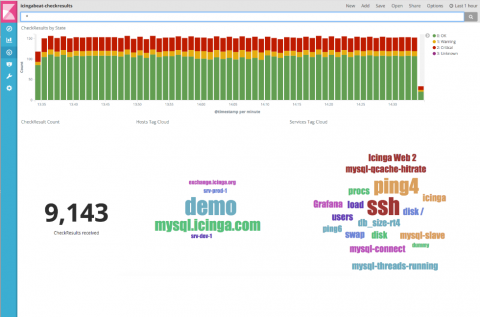
Releasing icingabeat v7.5.2

We’re happy to announce a new version of icingabeat, v7.5.2. With this release we ensure the compatibility with Elasticsearch 7.x and Logstash 7.x. Icingabeat is an Elastic Beat that fetches data from the Icinga 2 API and sends it either directly to Elasticsearch or Logstash. To get you data forwarded, icingabeat connects to the Icinga 2 event stream and receives all events happening within Icinga in real time.

How Making Cost a Non-Functional Requirement Helps the CloudZero Engineering Team Build Better Architecture

I never used to care about the cost of the systems I built. As an engineer, why would I? Especially in the days before the cloud, infrastructure resources were purchased and procured by somebody who worked many levels above me. Even when I first started building on the cloud, I had to submit requests (again, to somebody many levels above me) for my resources.