An elite DevOps team from Komodor takes on the Klustered challenge; can they fix a maliciously broken Kubernetes cluster using only the Komodor platform? Let’s find out! Watch Komodor’s Co-Founding CTO, Itiel Shwartz, and two engineers – Guy Menahem and Nir Shtein leverage the Continuous Kubernetes Reliability Platform that they’ve built to showcase how fast, effortless, and even fun, troubleshooting can be!
As Kubernetes environments become increasingly complex, the balance between reducing expenses and maintaining high performance is paramount. Businesses must leverage cost optimization tools to navigate this complexity without compromising on efficiency. These specialized tools provide crucial visibility into clusters, nodes, pods, and containers, allowing for precise management of resources and costs.
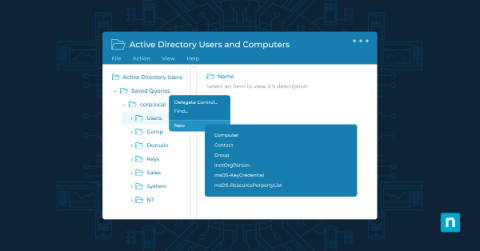
Active Directory Users and Computers (ADUC) is a management tool that provides a graphical user interface for managing and organizing the elements of a Windows Active Directory (AD) domain. Key functions include user, group, organizational unit, and computer management, as well as control of security and permissions and trust relationships between domains. ADUC provides system administrators with a centralized interface, simplifying complex tasks and enhancing the security of Windows environments.
Within the dynamic landscape of container orchestration, Kubernetes stands as a transformative force, reshaping the landscape of deploying and managing containerized applications. At the core of Kubernetes' capabilities lies its sophisticated networking model, a resilient framework that facilitates seamless communication between microservices and orchestrates external access to applications. Among the foundational elements shaping this networking landscape are Kubernetes Services and Ingress.
As technology evolves, with hackers perpetually sharpening their tools to breach our digital walls, understanding your computer’s built-in defenses is crucial. Kernel-mode hardware-enforced stack protection is one such mechanism. This article will look into the intricacies of this feature, as well as how to enable and disable kernel-mode hardware-enforced stack protection.