Operations | Monitoring | ITSM | DevOps | Cloud

Level up with distributed tracing: Enhancing application performance with Applications Manager

In our modern, digitally connected landscape where software stretches across diverse platforms and settings, trying to track a single request can seem like wandering through a maze with a blindfold on. This is where distributed tracing comes into play. It’s an essential technique that sheds light on the paths of digital transactions through complex systems, making the invisible visible. Distributed tracing offers many advantages for monitoring and fixing complex distributed systems.

End-to-end SAP Observability with Elastic, Google Cloud, and Kyndryl: A deep dive

Tens of thousands of companies in the world, across almost all industries, from midsize to large enterprises, rely on robust, efficient complex SAP systems to power their core operations. From sales to finance, from warehouse management to production planning and execution, business’s continuity, revenue, and customer success highly depend on processes running on enterprise resource planning (ERP) architectures.

The Rise of Mobile Website Monitoring: Ensuring Seamless User Experience Across Devices

Did you know that over half of global web traffic now comes from mobile devices? We have all struggled with a slow-loading mobile site at some point. It’s a common frustration, and that’s where mobile website monitoring comes into play. Today’s mobile-dominant landscape demands require that your website performs seamlessly across all devices.

Mobile APM best practices to ensure top user experiences

Whether you are a solopreneur or the owner of a large business, think about the instances on your website or app when customers feel irritated, stuck, or frustrated on their mobile screens. Be it an app slowdown, broken flow, or irregular functionality, a mobile application performance issue can make or mar a business's reputation quicker than ever before, especially since mobile phones have become the primary screens for many users.

Kubernetes Migration from Day Minus One (-1) to Day Two (2)

Kubernetes is now much past a hyped-up buzzword and has become nearly the de facto platform for microservices, enabling the flexibility and scalability modern engineering organizations require. It’s no surprise then that many organizations still running on legacy platforms are exploring how to migrate to cloud-native platforms like Kubernetes.

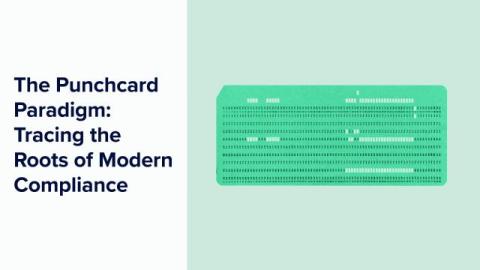
The Punchcard Paradigm: Tracing the Roots of Modern Compliance

In the early days of computing, creating software was a physical act, more akin to factory work than the streamlined digital process we know today. Programmers meticulously transcribed logic onto coding sheets, distinguishing zeros from ‘Os’ and ones from ‘Is’. These cryptic symbols formed the instructions that would be punched into thick card stock decks.

Universal Microsegmentation for VMs and Containers

In the rapidly evolving landscape of IT infrastructure, enterprises are increasingly moving away from traditional virtualization platforms due to rising licensing costs and the limitations these older systems impose on modern cloud-native application needs. The shift towards Kubernetes, which can manage diverse workloads such as containers, virtual machines (VMs), and bare metal environments, accelerates the migration from traditional virtualization platforms.

The Fourth Principle of AI by Design: Simplicity and Accessibility

A tool’s success often rests on one question: Is it easy to use? In this final installment of our series on the AI by Design framework, we’ll discuss how SolarWinds applies best practices in simplicity and accessibility to develop artificial intelligence-driven solutions that provide a deeply intuitive user experience. Let’s take a closer look.

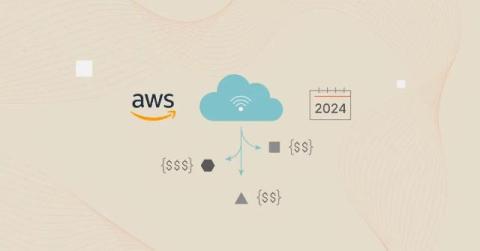
AWS Egress Costs Explained: How To Reduce Spend

The majority of cloud providers let you upload data for free. But moving that same data across their services, to another cloud provider, or back to your own data center comes at a cost commonly known as AWS egress costs. The cost may be cents per gigabyte (GB). But once you exceed the free tier’s 100 GB, it starts to add up. In this guide, we explain how AWS egress pricing works. With this understanding, along with the cost-saving tips we’ll share, you can reduce your egress costs like a pro.