Operations | Monitoring | ITSM | DevOps | Cloud

Automated Threat Hunting: A Closer Look

Proactively finding and eliminating advanced threats through threat hunting is a growing necessity for many organizations, yet few have enough resources or skilled employees to do it effectively. For those who do have an active threat hunting program, the process is often manual and time consuming. With cloud security automation, however, you can implement rules that automatically adjust your security policies based on the latest threat data.

4 steps to bring network observability into your organization

The vast majority of corporate IT departments have a network monitoring solution. Typically that solution is built on standalone software platforms. If that’s you, this post is for you. You’re probably hearing a lot about “observability” these days. Generally, that’s the ability to answer any question and explore unknown or unexpected problems to deliver great digital experiences to your users.

Monthly Moo | April 2022

We are well into 2022 and are busy bringing new exciting features to market. Our customers continue to provide input into our product roadmap and many new features are based on this collaborative effort. A big thank you to our valued customers. Throughout the year we will continue to drive innovation and allow our customers, of all sizes, to implement the most advanced AIOps solution in the shortest time possible.

Logbook: Team Discussion and Full Incident History

We've launched a feature that will help you fix errors and performance issues as a team! 🎉 With Logbook you get the full incident history. Read and leave team comments, see which notifications were sent at what time, and see team activity for changes in incident states. It's now easier than ever to see what the current state of an incident is.

Shipa Product Updates - 1.7.0 Release

We are really excited today to announce the Shipa 1.7.0 Release. Lots of great features and enhancements are packed in the latest release of Shipa. Several features coming from our customers and community, and you can now submit your ideas via the Idea Portal. Let’s take a look at what has been cooking at Shipa and upcoming events that you can catch us at.

Get more from your Jira integration with custom field support

When FireHydrant originally launched our Jira Cloud and Jira Server integrations, we did not support custom fields. This prevented customers who rely on Jira epic ticket types or other custom required fields from getting full value from our Jira integrations. That has changed with the launch of Jira custom field support. We now support the most common type of Jira epic tickets and field-level mapping of Jira custom fields with FireHydrant incident data.

Elastic on Elastic: How we saved $100,000/month by keeping our own software up to date

Let's start with the bottom line: When we upgraded to Elasticsearch 7.15 last year, our internal observability clusters saw a reduction in inter-node traffic from 464TB to 204.5TB per day. We monitored this reduction through subsequent upgrades and noticed its impact on our data transfer and storage costs. So here it is: upgrading saved Elastic $3,500 per day, or approximately $100,000 a month, or $1.2 million annually.

AppScope 1.0: Changing the Game for Infosec, Part 2

We’re introducing AppScope 1.0 with a series of stories that demonstrate how AppScope changes the game for SREs and developers, as well as Infosec, DevSecOps, and ITOps practitioners. This blog is the second of two Infosec stories. For both Part 1 and Part 2, Randy Rinehart, Principal Product Security Engineer at Cribl, contributed extensively.

What is Virtualization & Top 5 Benefits of Virtualization

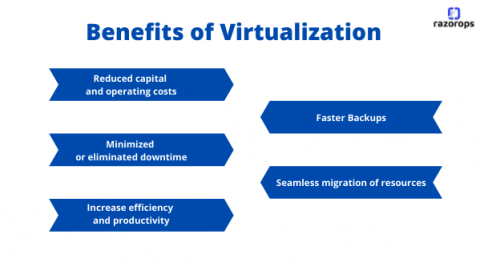
Virtualization uses software to create an abstract layer over the hardware. By doing this it creates a virtual computer system, known as the virtual machines (VMs). This will allow organizations to run multiple virtual computers, operating systems, and applications on a single physical server How Does Virtualization works: Virtual machine (VM) is a virtual representation of a physical computer.Virtual machines can’t interrelate directly with a physical computer, but.