Operations | Monitoring | ITSM | DevOps | Cloud

What is Synthetic Monitoring: The Secret Sauce to Network Monitoring

Picture this: You're the IT manager at a large company, and you're responsible for ensuring that your network is running smoothly. But how do you know if everything is working as it should be? You could wait for someone to report a problem, but that's reactive and not ideal. You could monitor your network constantly, but that's impractical and time-consuming. So what's the solution? Enter synthetic monitoring, the secret sauce to network monitoring.
NiCE VMware Management Pack 5.8

Great news for all VMware users! NiCE just rolled out VMware Management Pack 5.8 for Microsoft SCOM, bringing full support for VMware vSphere 8.0.1, 8.0.2, and 8.0.3. This update keeps your monitoring sharp and up-to-date with the latest VMware environments. Plus, we’ve polished up the docs to make life easier. If you’re an existing customer, this update is ready for you! Stay ahead of the game and keep your virtual environments running smoothly!

How To Monitor Kubernetes with Splunk Infrastructure Monitoring

Kubernetes is the standard for orchestrating containerized microservices — but it can present some monitoring challenges. Luckily, we’ve already covered why monitoring Kubernetes is a must-do, the basics of how to do it, and the options you have for collecting monitoring data from a K8s environment.

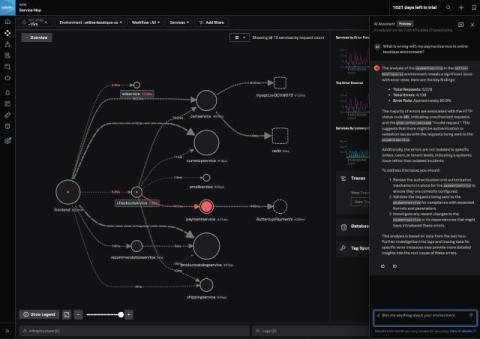
Solve Problems Faster with New, Smarter AI and Integrations in Splunk Observability

As businesses scale across hybrid and multi-cloud environments and integrate AI-powered technologies, complexity grows — and with it, the risk of performance degradation and cost of downtime. To avoid facing customer-impacting IT issues, organizations need better ways to correlate data across environments, detect anomalies before they escalate, and resolve incidents more efficiently. That’s where Splunk and Cisco come in.

How to visualize user journeys with Site24x7 to spot opportunities to improve the UX

Before judging anyone, walk a mile in their shoes. This is a great idiom that emphasizes the importance of experiencing what your customers experience when you offer a service. With empathy, IT product owners can ensure that their operations take into account user journeys to be responsive and responsible.

From Datadog to Grafana Cloud: Why companies migrate and how it changes business for the better

“Impossibly expensive.”“Generic database metrics.”“Exceeding limits.”“No transparency.” These are the words our customers use to explain why they looked for a Datadog alternative and migrated onto Grafana Labs’ observability solutions. Grafana Cloud provided the scalability that LexisNexis Risk Solutions needed to migrate acquired companies into a unified observability platform. “We’ve had migrations from Datadog.

Grafana Beyla 2.0: distributed traces, scalable Kubernetes deployments, and more

In November 2023, we released Grafana Beyla 1.0, the first major milestone in our pursuit of zero-code (and zero-effort) eBPF instrumentation. We delivered a way — through a single command-line — to automatically instrument any application supporting HTTP/gRPC protocols, as well as provide basic network packet flow information.

New Relic vs Kibana: A Guide to Choosing the Right Tool in 2025

New Relic and Kibana are popular monitoring and observability tools that provide a wide range of features for analysing and visualizing data. In this post, I have compared New Relic and Kibana based on key aspects such as data ingestion, dashboards and visualizations, log management, alerting, pricing and more. Lets take a look at each tool's capabilities, strengths, and weaknesses to help you understand how they differ and which one is best suited to your needs.

Stop Logging the Request Body!

With more and more people adopting OpenTelemetry and specifically using the tracing signal, I’ve seen an uptick in people wanting to add the entire request and response body as an attribute. This isn’t ideal, as it wasn’t when people were logging the body as text logs. In this blog post, I’ll explain why this is a bad idea, what are the pitfalls, and more importantly, what you should do instead.

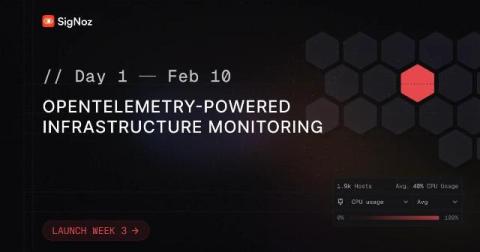
OpenTelemetry-Powered Infrastructure Monitoring

Today, we’re excited to announce a much-awaited feature in SigNoz: Infrastructure Monitoring, built natively on OpenTelemetry. Infrastructure monitoring is a critical aspect of modern observability. Without proper visibility into your infrastructure resources, troubleshooting issues, optimizing costs, and maintaining performance become challenging.