Operations | Monitoring | ITSM | DevOps | Cloud

Monitor Microsoft Azure Stack HCI with Datadog

Hyperconverged infrastructure (HCI) gives organizations more flexibility and control when building and securing their virtualized on-premises environments. Microsoft’s Azure Stack HCI is an operating system-as-a-service built for HCI backends that lets organizations deploy and manage their virtualized resources alongside any Azure infrastructure they are running.

Top 12 Advantages of Effective IT Monitoring Software

As a company’s IT systems develop and overlap in function, it becomes increasingly important that they be carefully monitored at all times. Active network monitoring helps to ensure central servers and systems are functioning as intended, while also allowing business management staff to keep an eye on employee activity in the process.

Application Performance Management for Microservices with Sumo Logic

Distributed tracing allows you to track the execution of your user's transactions by following them between applications’ microservices. It provides easy to understand visualizations of transactional lifespan with the ability to pinpoint any slowdowns and errors in response to microservices. During my presentation at Illuminate, I shared that we extended the Sumo Logic platform to cover application performance use cases.

AWS Well-Architected and Serverless: Performance Efficiency

And just like that – welcome to the last part in our “Well-Architected and Serverless” series. We hope it’s been informative, insightful, and fun for you, to explore the five pillars of the AWS Well-Architected Framework (WAF) with us! Read the previous posts: Part 1: Security Pillar Part 2: Operational Excellence Pillar Part 3: Reliability Pillar Part 4: Cost Optimization Pillar So let’s look into the last – Performance Efficiency (PERF) – pillar.

Milestone Met - 100k IPv6 Subnets Announced!

It took about twenty-three years, a couple of IPv6 days, the exhaustion of most of the IPv4 address pools available at Regional Internet Registries (RIRs), and the increase of prices in IPv4 address market, but finally, it looks like IPv6 made it and met one important threshold in November 2020 – 100k IPv6 prefixes are now currently announced on the Internet!

Why Predict When You Can Prevent?

In the evolving world of IT monitoring, I see that many organizations want to move to predictive monitoring. They usually allocate a significant budget for this type of effort that ultimately fails to yield the desired return on investment. Often, organizations are already collecting and processing large amounts of IT telemetry streams and using multiple solutions to monitor their systems. So, predictive monitoring seems like the logical next step.

Aggregating Hosted DigitalOcean Logs to Papertrail

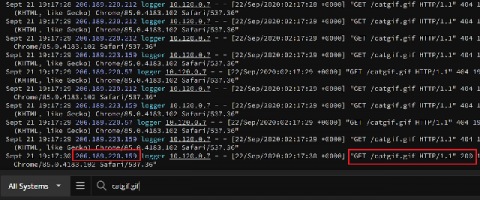
DigitalOcean droplets provide low-cost scale from a popular server provider. With DigitalOcean Monitoring, you can collect metrics for visibility, monitor Droplet performance, and receive alerts when problems arise in your infrastructure. But when you need to deep dive into your application to debug an issue, resolve an incident, or identify opportunities to improve your platform, you need a deep understanding of the underlying operating system and how it interacts within its environment.

New SAML Group Mapping Support

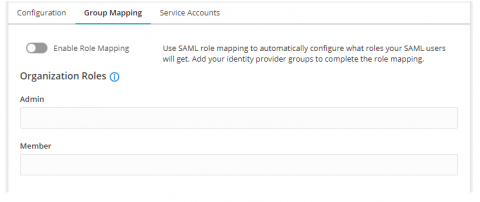
In July, we rolled out SolarWinds® Papertrail™ support for SAML v2.0. SAML authentication allows you to log into your Active Directory® domain or intranet and have immediate access to Papertrail, with no additional login required. Today we’re extending Papertrail SAML 2.0 support to include group mapping. Group mapping allows you to define organization and product roles, and grant access to logs and billings plans, by adding an account to an identify provider group.

A Crash Course in Kubernetes Monitoring

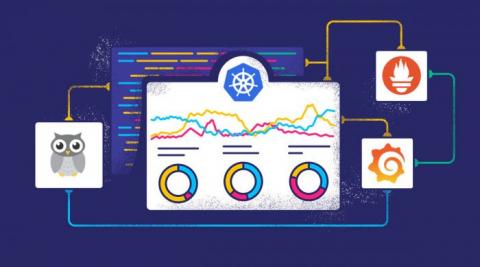
Kubernetes monitoring can be complex. To do it successfully requires several components to be monitored simultaneously. First, it’s important to understand what those components are, which metrics should be monitored and what tools are available to do so. In this post, we’ll take a close look at everything you need to know to get started with monitoring your Kubernetes-based system.