Operations | Monitoring | ITSM | DevOps | Cloud

3 Ways to Use the xMatters and Google Operations Suite Integration

Not too long ago, you would have needed development experience to oversee the delivery of scalable and reliable software. But with the rise of low-code and no-code tools, that requirement is now obsolete. What used to be hours of coding has turned into a few minutes of dragging and dropping.
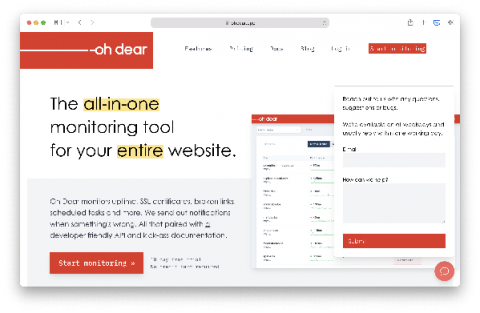

Introducing our new support bubble

Like most SaaS products, Oh Dear is a living platform. We add new features proposed by our users, fix bugs that get reported, and regrettable also sometimes introduce new bugs. Most users use email to communicate with us. Even though sending an email is often perceived as friction-free, it can be a minor hurdle. We've introduced a little support bubble at the bottom of every page to make it easier for our users to pass us feature requests and report bugs.

How Do You Know Your Website is Down?

Did you know that California was one of the earliest adopters in the world for earthquake automated detection? Though rudimentary, early systems were literally horns strapped to government buildings, the idea was simple: sound an alarm the moment that an earthquake could be confirmed. The critical period of warning residents get can prove the difference between finding shelter and securing your family. In a land where earthquakes level buildings, detection was critical.

How to extend the Geth collector

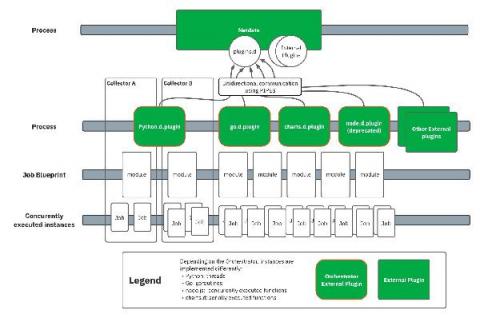
This is the the last of a 2-part blog post series regarding Netdata and Geth. If you missed the first, be sure to check it out here. Geth is short for Go-Ethereum and is the official implementation of the Ethereum Client in Go. Currently it’s one of the most widely used implementations and a core piece of infrastructure for the Ethereum ecosystem. With this proof of concept I wanted to showcase how easy it really is to gather data from any Prometheus endpoint and visualize them in Netdata.

You can now customize the names of services in StatusGator

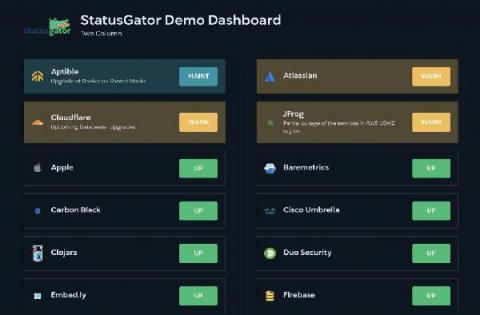
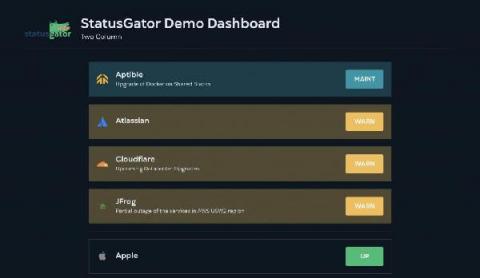
StatusGator is the easiest way to publish a unified status page featuring the status of all the services you depend on. Our public status dashboards have become a favorite feature allowing schools, startups, and enterprises alike to publish a quick and easy page showing the status of all their cloud services. One commonly requested feature has been the ability to customize the name of each status page listed in your dashboard.

Logz.io's New Lookz is Generally Available!

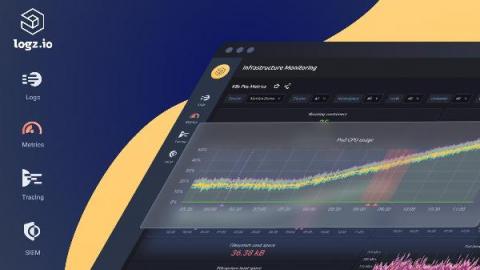
Back in June, we announced the Public Beta for Logz.io’s New Lookz – which is a new UI that completely changes the way users navigate across Logz.io products and features. The Public Beta gave users the option to toggle between the old and new UIs to see which one they liked better. And the answer from our users was as clear as it could be.

Status Dashboards now automatically refresh!

Many customers have requested that StatusGator’s customizable, brandable, aggregated status dashboards automatically refresh. Well your auto refreshing dreams have just come true because StatusGator status dashboards now update every 5 minutes automatically! Each dashboard will now refresh every 300 seconds, otherwise known as 5 minutes, automatically. And, of course, you can still refresh your browser yourself to get the latest content.

Status Dashboards: Now with dark mode!

Since we first launched our customizable, brandable, public status dashboards, customers have been asking us for a dark mode version. We’re excited to announce dark mode has arrived! StatusGator is the premier status page aggregator that collects the status of all the services you depend on and organizes them into a handy public dashboard you can send to your team, users, or stakeholders. And now it won’t blind you with it’s bright white background!

Auto-Instrumenting Ruby Apps with OpenTelemetry

In this tutorial, we will go through a working example of a Ruby application auto-instrumented with OpenTelemetry. To keep things simple, we will create a basic “Hello World” application, instrument it with OpenTelemetry’s Ruby client library to generate trace data and send it to an OpenTelemetry Collector. The Collector will then export the trace data to an external distributed tracing analytics tool of our choice.

Jaeger vs Elastic APM - key differences, features and alternatives

Jaeger is an open-source end-to-end distributed tracing tool for microservices architecture. On the other hand, Elastic APM is an application performance monitoring system that is built on top of the ELK Stack (Elasticsearch, Logstash, Kibana, Beats). In this article, let's explore their key features, differences, and alternatives. Application performance monitoring is the process of keeping your app's health in check. APM tools enable you to be proactive about meeting the demands of your customers.