Operations | Monitoring | ITSM | DevOps | Cloud

What is the Purpose of Observability? In a Word, Innovation

Asking an IT engineer or SRE to define the purpose of observability is kind of like asking someone to explain the purpose of life: There are lots of different opinions out there, and no way of proving any of them right or wrong. You could argue that observability is just a buzzword that refers to what used to be called monitoring.

Introducing the Sensu pipeline resource

Sensu’s observability pipeline includes resources for collecting, filtering, transforming, and processing observability data: checks, event filters, mutators, and handlers. These resources and Sensu’s observability pipeline concept are well seasoned and widely used at thousands of companies. However, configuration can be somewhat unintuitive, especially for new users.

The 2022 State of Observability Report

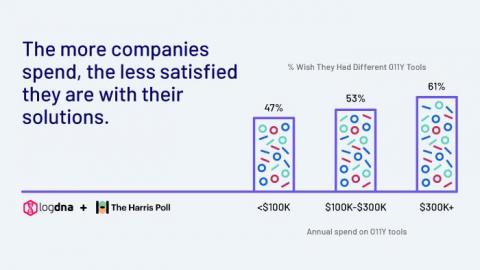
Interest in observability is at an all-time high. When we attended KubeCon in Los Angeles in October, observability and security were everywhere—in conversations with attendees and other vendors, during sessions, and in messaging at booths—indicating that there’s still an unmet need. In fact, Gartner declared that observability is at the ‘peak of inflated expectations' in a recent Hype Cycle report.

HoneyByte: Using Application Metrics With Prometheus Clients

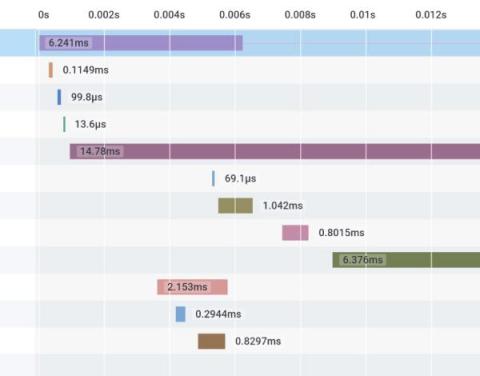
Have you ever deep dived into the sea of your tracing data, but wanted additional context around your underlying system? For instance, it may be easy to see when/where certain users are experiencing latency, but what if you needed to know what garbage collection is mucking up the place or which allocated memory is taking a beating? Imagine having a complete visual on how an application is performing when you need it, without having to manually dig through logs and multiple UI screens.

Enabling the Self Driving Cloud with Splunk Observability Cloud and GKE Autopilot

In 2021, any time that you access any kind of web service, whether it be via a website or app, chances are high that the backend is running on Kubernetes. Hundreds of thousands of organizations rely on Kubernetes to power and manage their mission critical services every day, and the reliability and scalability benefits offered by Kubernetes have been felt across the industry.

What is eBPF and Why is it Important for Observability?

Observability is one of the most popular topics in technology at the moment, and that isn’t showing any sign of changing soon. Agentless log collection, automated analysis, and machine learning insights are all features and tools that organizations are investigating to optimize their systems’ observability. However, there is a new kid on the block that has been gaining traction at conferences and online: the Extended Berkeley Packet Filter, or eBPF. So, what is eBPF?

Why you Need WiFi Observability in the Era of Work From Anywhere

“Work from anywhere” is now a common occurrence. With so many companies now dependent on a distributed workforce, IT teams need to be able to quickly diagnose and troubleshoot WiFi problems. Moreover, they, themselves, are often working remotely. In order to successfully do their jobs, consistent WiFi is obviously essential for remote workers.

Tracing makes a bug easy to spot

Today, I found a bug before I noticed it. Like, it was subtle, and so I wasn’t quite sure I saw it—maybe I hadn’t hit refresh yet? Later, I looked at the trace of my function and, boom, there was a clear bug. Here’s the function with the bug. It responds to a request to /win by saving a record of the win and returning the total of my winnings so far. Can you spot the problem in the TypeScript? It’s subtle. Now here’s a trace in Honeycomb: Now do you see the bug?