Operations | Monitoring | ITSM | DevOps | Cloud

Collecting Kafka Performance Metrics with OpenTelemetry

In a previous blog post, "Monitoring Kafka Performance with Splunk," we discussed key performance metrics to monitor different components in Kafka. This blog is focused on how to collect and monitor Kafka performance metrics with Splunk Infrastructure Monitoring using OpenTelemetry, a vendor-neutral and open framework to export telemetry data. In this step-by-step getting-started blog, we will.
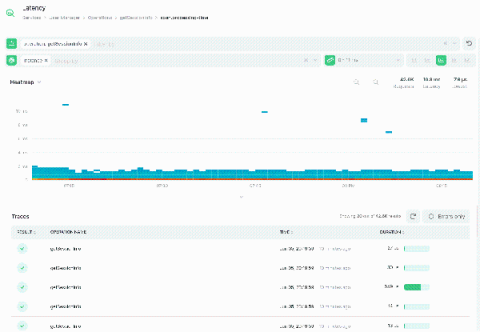
Two Quick Ways to Create Spans with Kamon Telemetry

If you already had some experience with Kamon, you probably saw Kamon create Spans automatically for a lot of stuff, including HTTP server requests, database calls, actor messages, and more. But what happens when you want to create Spans for methods or code blocks that Kamon doesn’t instrument automatically? Let’s look at the two simplest ways to create Spans programmatically with Kamon.

Use Logz.io to Instrument Kubernetes with OpenTelemetry & Helm

Logz.io is always looking to improve the user experience when it comes to Kubernetes and monitoring your K8s architecture. We’ve taken another step with that, adding OpenTelemetry instrumentation with Helm charts. We have made Helm charts available before, previously with editions suitable for Metricbeat and for Prometheus operators.

Is Distributed Tracing Really a Big Deal ?

Microservice architectures are everywhere these days. Even internal enterprise applications—which have typically been structured as self-contained monoliths—are now being designed using a microservices architecture. There are definite advantages to a microservices architecture. Breaking an application into discrete, independent chunks—basically mini apps—gives you enormous flexibility. But this flexibility dramatically increases complexity, especially when things go wrong.

Distributed Tracing vs. Application Monitoring

Application monitoring is a well-established discipline that dates back decades and remains a pillar of software management strategies today. However, as software environments and architectures have evolved, monitoring techniques have needed to evolve along with them. That’s why many teams today rely on distributed tracing to glean insights that they can’t gather from application monitoring alone.

Using Distributed Tracing in Microservices Architecture

With the rise of microservices based cloud applications & its corresponding complexities, the need for observability is greater than ever. This blog looks into the what-why of distributed tracing along with few best practices to adopt for the same in microservices architecture. Distributed tracing for Microservices architecture is an emerging concept that is gaining momentum across internet-based business organizations.

From Distributed Tracing to APM: Taking OpenTelemetry & Jaeger Up a Level

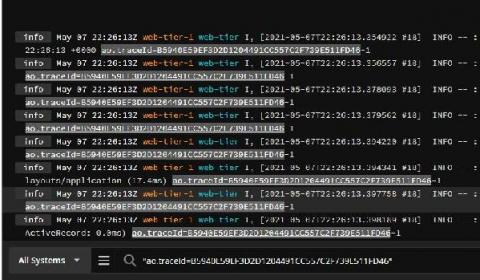
It’s no secret that Jaeger and OpenTelemetry are known and loved by the open source community — and for good reason. As part of the Cloud Native Computing Foundation (CNCF), they offer one the most popular open source distributed tracing solutions out there as well as standardization for all telemetry data types.

Adding free and open Elastic APM as part of your Elastic Observability deployment

In a recent post we showed you how to get started with the free and open tier of Elastic Observability. Today we'll walk through what you need to do to expand your deployment so you can start gathering metrics from application performance monitoring (APM), or "tracing" data in your observability cluster, for free.