Operations | Monitoring | ITSM | DevOps | Cloud

Why Most ML Projects Break After the Model is Built

A machine learning model may perform brilliantly on test data, but it can also turn problematic as soon as it is pushed to production. The issue is rarely the algorithm itself. While prototyping and during testing, a model usually runs in an ideal environment where the data is prepared, the infrastructure is known, the inputs are relatively predictable, and someone is usually closely watching the experiment.

Boosting Customer Experience With Seamless Payment Flows

The final step in any transaction, payment, is often the most overlooked part of the customer experience. Businesses pour resources into attracting customers and guiding them to a purchase, only to lose them at the last minute because of a clunky, confusing, or untrustworthy payment process. A smooth payment flow isn't just a technical detail; it's important for customer satisfaction and brand loyalty. When a customer decides to buy, giving you their money should be the easiest part of their entire interaction with your brand.

The StatusGator mobile app is here

We’re excited to launch the StatusGator mobile app for iOS and Android, designed to put outage alerts right in the palm of your hand. Your StatusGator status page is the central hub for your entire organization to view and understand the status of all your services. These pages have always been accessible on mobile. Now, with the dedicated app, end users of your status page can take the services they depend on with them and receive updates directly on their phones.

Top tips: Find the right answer in a sea of search results

Top tips is a weekly column where we highlight what's trending in the tech world and list practical ways to explore these trends. This week, we're looking at how to search the web more effectively and find the information you need faster. Searching the web can feel a little like playing hide-and-seek. You know what you're looking for is somewhere out there, but the internet has an impressive number of places to hide it.

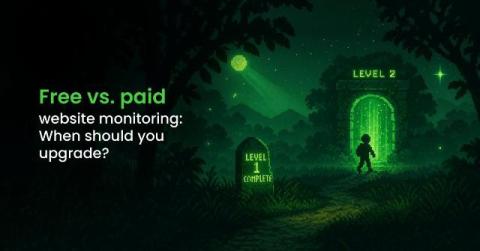
Free vs. paid website monitoring: When should you upgrade?

Every growing business hits a moment of truth somewhere between "we just launched" and "we just lost a customer because our site was down for 40 minutes." It's then that you realize the free monitoring tool you set up six months ago—the one that felt more than adequate at the time—is no longer pulling its weight.

High Bandwidth Usage on Firewalls: How to Diagnose & Fix It

If your network has been feeling sluggish, connections keep dropping, or you're getting alerts that don't point to an obvious cause, high bandwidth usage is one of the most common culprits and one of the hardest to pin down without the right visibility. The tricky part is that "slow network" can mean a dozen different things depending on where the congestion is actually happening.

Beyond the 10-year mark: Extending Ubuntu Pro 16.04 LTS security coverage

A decade ago, Canonical launched Ubuntu 16.04 LTS (codenamed “Xenial Xerus”). As a Long-Term Support (LTS) release, it comes with 5 years of standard security coverage, which is doubled to a total of 10 years through Expanded Security Maintenance (ESM) for users with an Ubuntu Pro subscription. As of April 30, 2026, the 10-year ESM coverage for Ubuntu 16.04 LTS, under Ubuntu Pro, has officially reached its end of support.

Android development shouldn't start with a physical device

How on-demand Android environments lay the foundation for Android engineering Software engineering has evolved dramatically over the last decade. Development environments that once depended on dedicated hardware have become resources that can be provisioned, configured, and removed on demand. Infrastructure is now expected to be reproducible, automated, and integrated into continuous development workflows. However, Android has largely remained an exception.

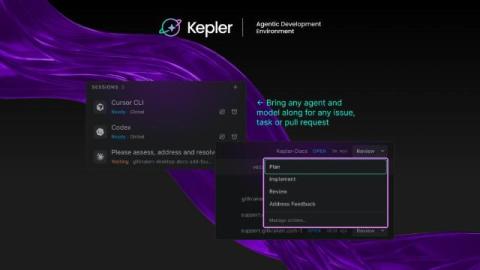
What Is an Agentic Development Environment? Kepler Is GitKraken's Answer.

Every new AI coding agent comes with the same pitch: write code faster. For most devs, that part already checks out. Codex writes a function in seconds. Claude Code refactors a file mid-meeting. Copilot fills in a test before you finish describing it. None of that touches the problem that shows up an hour later: five agents running across three repositories, each with its own diff, and no single place to see what’s stuck, what’s done, and what’s actually safe to ship.