Operations | Monitoring | ITSM | DevOps | Cloud

Explore NGINX usage, performance, and transactions to increase customer experience

If your team falls into the majority of organizations that use NGINX – which remains the world’s most popular Web server – to host websites and Web applications, monitoring NGINX usage, performance, and transactions is critical for maintaining a positive end-user experience. Keep reading for tips on doing so. This article identifies the most important metrics to monitor for NGINX in order to understand key usage and performance trends within NGINX transactions.

Sumo Logic joins AWS to accelerate Amazon CloudWatch Metrics collection

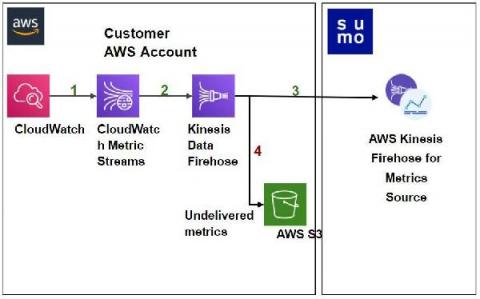
We are excited to join AWS for the launch of Amazon CloudWatch Metric Streams; a fully managed, scalable, and low latency service that streams Amazon CloudWatch metrics to partners via Amazon Kinesis Data Firehose. AWS and Sumo Logic customers can now leverage AWS Kinesis Firehose for Metrics Source for streaming CloudWatch metrics into their Sumo Logic accounts, to help simplify the monitoring and troubleshooting of AWS infrastructure, services, and applications.

Microservices vs. Serverless Architecture

Microservices and serverless are both important topics in the world of cloud-native computing. Yet, although serverless functions and microservices architectures often go hand-in-hand, they’re distinct technologies that fill different roles in modern software environments. Here’s an overview of what microservices and serverless are, how they relate to each other, how they are different, and why you may or may not wish to deploy a serverless microservice.

Sumo Logic extends its APM to browser

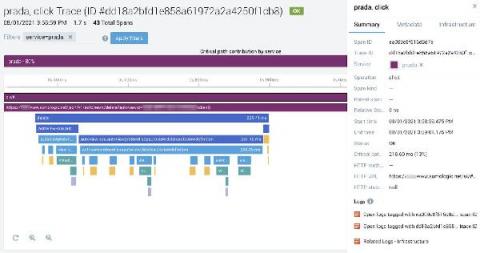
Over a year ago we decided to invest heavily in Application Observability, understanding the modern observability platform must unite logs, metrics, and traces in one analytics layer to better serve reliability use cases. We have also advocated a modern trend to acquire tracing data via open source industry standards like OpenTelemetry without vendor lock-in.

Efficiently Monitor the State of Redis Database Clusters

Monitoring Redis, the open source in-memory data platform, is complicated enough when you are hosting your Redis instance on just a single server. It gets even more complex when you build a Redis cluster that consists of multiple nodes and distribute your data across them. But as long as you know which metrics to prioritize and how to collect them, Redis monitoring is feasible enough. This article offers an overview of how to monitor the state of Redis database clusters.

Sumo Logic to accelerate modernization of security operations with proposed acquisition of DFLabs

At Sumo Logic, our belief is that security operations is no longer a human scale problem. We need tools and technologies to aid our defenders and responders to be able to process, investigate and respond at machine speed. Our vision for modernizing security operations to deal with threats at machine scale has always encompassed more than just SIEM.

Forrester TEI study: Sumo Logic's Cloud SIEM delivers 166 percent ROI over 3 years and a payback of less than 3 months

We are seeing a renewed focus on accelerating digital transformation projects across business ecosystems and workflows within our customer base. These projects are enabling key business outcomes and this organizational transformation has given security and IT leaders the catalyst and opportunity to modernize security operations while eliminating on-premises debt.

Sumo Logic Continues to expand Public Sector Footprint

In a recent press release entitled ‘Sumo Logic Achieves FedRAMP Moderate Authorization’, dated Feb 2, 2021, the pioneer in continuous intelligence announced its Continuous Intelligence Platform™ has achieved Federal Risk and Authorization Management Program (FedRAMP™) Authorization at a Moderate impact level enabling the company to help public sector organizations get real-time insights into their complex on-premises and cloud environments.

Observability vs. Monitoring: What's the Difference?

One of the more delicate debates in the DevOps world is what observability has to do with monitoring. Is observability just a trendy buzzword that means the same thing as monitoring? Is observability an improved version of monitoring? Are monitoring and observability different types of processes that solve different problems? The answer to those questions depends in part on your perspective.