Operations | Monitoring | ITSM | DevOps | Cloud

Introducing Sensu

Since 2010, it has been Sumo Logic’s mission to democratize machine data. Naturally, we tend to focus on the outcomes: reliable and secure applications and systems that are the engines of successful modern businesses. But to drive these outcomes, and before the spotlight-hogging analytics kick in, algorithms require data. And this is where the magic starts! Sensu has been working on championing a monitoring as code approach to building observability pipelines for a decade now.

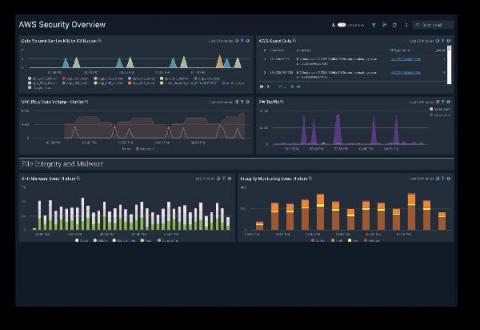
Introducing Sumo Logic Cloud SIEM powered by AWS

The Sumo Logic team is pleased to introduce the general availability of Sumo Logic Cloud SIEM powered by AWS. This joint solution will empower CIOs, CISOs, security and IT leaders to solve modern and legacy security operations use cases for Enterprises of all sizes and maturity with deep and contextualized insights to reduce the time to detect and respond to threats.

Distributed Tracing vs. Application Monitoring

Application monitoring is a well-established discipline that dates back decades and remains a pillar of software management strategies today. However, as software environments and architectures have evolved, monitoring techniques have needed to evolve along with them. That’s why many teams today rely on distributed tracing to glean insights that they can’t gather from application monitoring alone.

What Is Threat Intelligence?

It's one thing to detect a cyber attack. It's another to know what the attackers are trying to do, which tactics they are using, and what their next move is likely to be. Without that additional information, it's difficult to defend effectively against an attack. You can't reliably stop an attack if you are unable to put yourself in the mindset of the attackers. This is why threat intelligence plays a critical role in modern cybersecurity operations.

Cloud SIEM accelerates modernizing security operations across Asia Pacific

Security operations is now a critical business function tasked with securing digital transformation initiatives, to effectively mitigate evolving attacks and expanding attack surfaces, handle complexity and tool proliferation while teams are continuing to be virtual and distributed.

Using Telegraf to Collect Infrastructure Performance Metrics

Telegraf is a server-based agent for collecting all kinds of metrics for further processing. It’s a piece of software that you can install anywhere in your infrastructure and it will read metrics from specified sources – typically application logs, events, or data outputs.

Accelerate Incident Resolution By Benchmarks-enriched On-call Contexts

In a recent experiment with my colleagues, I polled them about the following: “What would they do if the lights went out as you worked at night?” Besides identifying the funny and who-you-want-in-case-of-an-emergency responses, most of my colleagues checked to see if the problem might be broader than their own home.

Tail your logs with Tailing Sidecar Operator

When migrating to Kubernetes and re-architecting your applications into containers, logging is a critical piece to consider. The twelve-factor app methodology has a section dedicated to logging and outlines the importance of not worrying about routing and storage of your logs. As a best practice, applications running in containers should rely 100% on standard output (STDOUT). Unfortunately, getting logs from applications that do not write to STDOUT is non-trivial and has many things to consider.

Extend AWS Observability Beyond CloudWatch

It’s essential to choose the right tool for the job. I have an old, sturdy screwdriver that I use for lots of odd DIY jobs around my house, like cleaning gutters, opening paint cans, and general maintenance on my lawnmower. However, when I’m performing an upgrade on my computer, a large, rusty screwdriver isn’t the best tool to remove the screws anchoring my motherboard.