Operations | Monitoring | ITSM | DevOps | Cloud

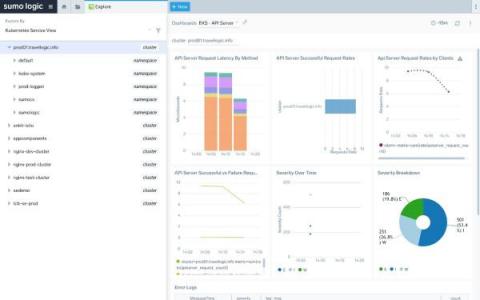
Why and how to monitor AWS EKS

Amazon Elastic Kubernetes Service, or EKS, is a managed Kubernetes service. That means that Amazon Web Services (AWS) handles some of the deployment and management tasks for users. But the fact that EKS is a managed service doesn’t mean that AWS manages all administrative tasks. One key management task that isn’t fully covered as part of EKS is monitoring.

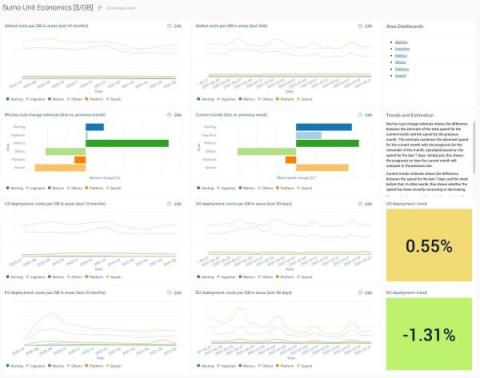
How Sumo Logic monitors unit economics to improve cloud cost-efficiency

An often overlooked aspect of a company’s journey to the cloud is cost visibility. While the single number delivered by the cloud provider on a monthly invoice is straightforward, understanding where this number comes from is often more tricky. Fortunately, this task can be facilitated through the usage of various cost monitoring tools available on the market, coming from both third-party companies and the cloud providers themselves.

Top six Amazon S3 metrics to monitor

When you’re planning an application performance monitoring (APM) strategy, collecting metrics from storage services like Amazon S3 may not seem like a priority. After all, part of the point of object storage is that applications can read and write from storage buckets seamlessly, with minimal configuration and overhead. Unlike databases or file systems, storage buckets don’t require complex configurations that could lead to performance issues.

The Future of Sumo Logic Observability

I have always found data collection to be a fascinating area of work at Sumo Logic. Collecting data is a critical first step for all the solutions we develop for our customers. After all, to observe the health and performance of your applications, you must first collect all relevant data. It's also an area that has seen some significant activities by the open-source community over the years, which is completely changing the landscape of observability as we know it.

Illuminate 2021 - Embracing open standards for big picture observability

We just wrapped up a fantastic 5th Illuminate, Sumo Logic’s user conference, filled with amazing customer speakers, partners, and Sumo Logic experts all sharing their insights and expertise. The level of engagement taking place during presentations, workshops and executive meetings showed the high level of interest in open telemetry, unified analytics and full-stack observability to solve the challenges inherent in application modernization and cloud migration.

Troubleshooting Outages at 3 AM with Alert Response

Imagine you are an on-call engineer, who receives an alert at 3 AM in the morning informing you that customers are experiencing high latency on your website, and are unable to shop. Being an Incident response coordinator myself at Sumo Logic, I can tell you, I don’t envy being that engineer. If this alert fired, this is what would likely follow: The biggest challenge is how to gather this information quickly, so you can decide whether to jump out of the bed or go back to sleep.

Sumo Logic Extends Monitoring for AWS Lambda Functions Powered by AWS Graviton2 Processors

Organizations are constantly trying to maintain pace with users' expectations and desires from a digital experience. These users expect an experience that constantly changes based on their preferences and behavior, which means innovating quickly and improving software is critical to user happiness and driving business success.

Extending Observability to App Infrastructure

We know organizations today rely on software applications to drive their digital transformation, providing customers with the tools, features and experience end-users have come to expect when doing things such as transact, work and communicate, to name a few. Ensuring a great user experience, however, means making sure the various elements making up a usable application are running smoothly and reliably.

Monitoring HAProxy Logs and Metrics with Sumo Logic

HAProxy is one of the world’s most innovative and highest-performing load balancing solutions. The load balancer is critical for enabling high availability and supporting the dynamic scaling of infrastructure within modern applications. Because of its importance, engineers need tools that can quickly and effectively diagnose any problems with the load balancer if they arise.

Sumo Logic Red Hat Marketplace Operator

Red Hat OpenShift is an open source container application platform that incorporates a collection of software that enables developers the ability to run an entire Kubernetes environment. It includes streamlined workflows to help teams get to production faster and is tested with dozens of technologies while providing a robust tightly-integrated platform supported over a 9-year lifecycle.