Operations | Monitoring | ITSM | DevOps | Cloud

The latest News and Information on APIs, Mobile, AI, Machine Learning, IoT, Open Source and more!

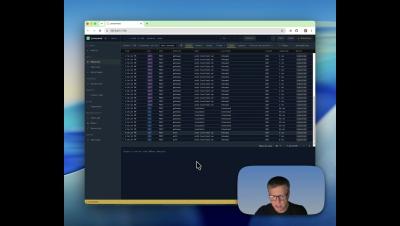
How to Trace Microservices WITHOUT OpenTelemetry

Learn how to trace complex multi-hop transactions across microservices when OpenTelemetry isn't available or trace parents get lost. This quick tutorial demonstrates how to use full-text search in proxymock (a free CLI and UI tool) to isolate user journeys (like looking up a specific username) and instantly generate waterfall tracing views. Whether you are working locally or in a Kubernetes cluster, you can record API traffic, visualize multi-hop requests, and easily transition those captures into load or regression tests.

Building AI SRE Agents, Part 1: Start Local, Break Things, Learn Fast

The first stage of AI SRE maturity is a laptop, a throwaway cluster, and zero production access. Here’s how to set it up, and what to watch for. AI SRE (Site Reliability Engineering) agents are AI-powered systems that automate the most time-consuming parts of incident response: triaging alerts, correlating logs and metrics, generating root-cause hypotheses, and proposing remediation steps.

AI Detection in Your Content Pipeline: How to Reason About Detector Accuracy Before You Build a Gate Around It

Every ops team eventually inherits a check that nobody can fully explain. It runs on every release, it blocks the pipeline when it fires, and when you ask why the threshold is set where it is, the answer is some version of "it was like that when I got here." AI text detection is becoming that check for content operations. Teams are wiring detectors into publishing workflows, documentation pipelines, and vendor review steps, treating a probability score as a pass or fail gate. Then a genuinely human-written runbook gets flagged, a release stalls, and someone has to decide whether to trust the tool or override it.

The Future of Governing AI Agents in Enterprise Order Processing

Governing AI agents are rapidly reshaping how enterprises manage complex, high-volume order workflows, from automated validation to exception resolution and fulfillment routing. As AI models become more reliable and context-aware, organizations are shifting from human-heavy processes to autonomous systems that can handle end-to-end order lifecycle management with minimal manual intervention.

The Modern Insurance Agency Tech Stack: What You Actually Need

Walk into an insurance agency these days. It looks different. No mountains of paper. No frantic searching for files. No sticky notes covering every surface. Something changed. Tech took over. But here is the catch. There is way too much tech out there. Vendors push their stuff nonstop. They promise gold. They deliver confusion. Agencies blow cash on tools they do not need. They skip the ones that actually help. That hurts.

What is oil and gas asset management software?

Oil and gas asset management software is a specialized system for tracking, maintaining, inspecting, and optimizing physical assets across upstream, midstream, and downstream operations. It connects asset records, work orders, inspection data, operational signals, compliance requirements, and performance analytics so teams manage equipment reliability, safety, cost, and asset life from one controlled data source.

Rethinking Sprite Creation Costs for Indie Developers

The gap between game design ambition and art production has never been more visible. Over the past twelve months, a growing number of indie teams have discovered that the bottleneck isn't always code, mechanics, or level design-it's the sheer volume of sprite frames required to bring a single character to life. A walking cycle alone can consume an entire weekend. A complete character with idle, attack, and jump animations often stretches into weeks of pixel-by-pixel work.