Operations | Monitoring | ITSM | DevOps | Cloud

The latest News and Information on APIs, Mobile, AI, Machine Learning, IoT, Open Source and more!

A scored benchmark of four online video downloaders

Opinions about download tools are cheap. Numbers are harder to argue with. So instead of vague praise, I ran four popular web downloaders through a fixed benchmark, scored each on the same five criteria, and added the scores up at the end. The method was deliberately boring. One test set of ten videos, ranging from a 30-second clip to a 90-minute stream, run through every tool on the same machine and connection. Each criterion scored from 1 to 10. No half-points, no vibes.


What Separates a Serious AI Data Collection Company From One That Just Says It Is

Most AI projects don't fail at the model architecture stage. They don't fail at deployment. They fail earlier and more quietly - at the point where the data that was supposed to train the model turns out to be insufficient, inconsistent, or simply wrong for the task it was collected to serve. Choosing the right ai data collection companies is, in this sense, one of the highest-leverage decisions an organization makes when building AI capability - and one of the decisions most commonly made on the wrong criteria.

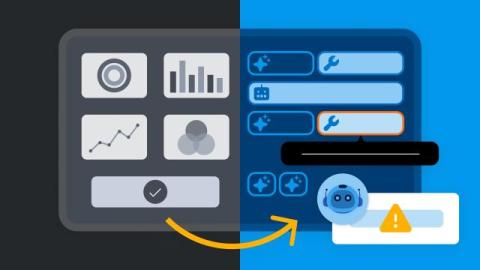
Your AI Coding Agent Is Flying Blind in Production

Your AI coding agent can refactor a module, write tests, and open a PR. It can read your codebase, understand your patterns, and suggest changes that follow your conventions. What it cannot do, unless you set it up, is see what is actually happening in production. That is a problem. The agent that writes the code should have access to the errors, traces, and performance data that code generates once it ships. Without production context, your agent is writing fixes based on the code alone.

Monitoring AI Applications in 2026: What You Actually Need

Last updated: July 2026. Your AI feature works in development. It demos well. Then it hits production and you discover three problems your test suite did not catch: the LLM hallucinates product names that do not exist, the RAG retrieval step adds 4 seconds to every request, and your OpenAI bill is 3x what you budgeted because one prompt template is burning tokens on context that does not help the output. Traditional APM would have caught the latency.

AI Is Reshaping the Tech Industry in 2026: What Consumers and Businesses Need to Know

Artificial intelligence has evolved from an emerging technology into one of the biggest drivers of innovation across the global technology industry. In 2026, AI is influencing everything from smartphones and laptops to cybersecurity, cloud computing, enterprise software, and digital productivity tools. Companies worldwide are investing heavily in AI powered products that improve efficiency, automate repetitive tasks, and deliver more personalized user experiences.

The DevOps Hiring Crunch: How Distributed Teams Are Closing the Gap

Ask any engineering leader what keeps them up at night and "who's covering the pager next Tuesday" is usually somewhere on the list. DevOps and SRE roles have become some of the hardest positions to fill in software, and the shortage is starting to show up in the metrics ops teams care about most: MTTR, alert fatigue, and how many people are burned out on the on-call rotation.

Observability vs. Monitoring for AI Systems

Monitoring tells you when an event you predicted has actually happened. Observability lets you investigate behavior you may not have predicted at all. For most of the past decade, that distinction was something teams could afford to treat as a philosophical debate, because their systems failed in expected ways that had been seen before. A memory leak, a bad deploy, a saturated connection pool. You could build a dashboard and alerts for each and sleep reasonably well.

15 Best AI Observability Tools for Production Teams in 2026

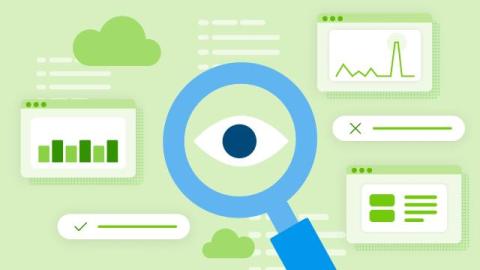
AI applications generate far more than model outputs. Every request includes prompts, retrieval, tool calls, agent steps, latency, token usage, and evaluation signals that all contribute to the final response. When something goes wrong, engineering teams need to understand what happened, why it happened, what it cost, and whether the outcome met quality expectations.

Why AI agents need a job description | The future of agentic AI in IT

An AI agent is only as useful as the job you can safely hand it. In this Zero Ticket Minute, Ian Coppock, Resolve Customer & Partner Marketing Manager, breaks down why enterprise AI is moving toward purpose-built agents with defined roles, scoped permissions, and real guardrails. That is the foundation for autonomous IT operations and Zero Ticket IT. Subscribe for weekly insights on AI, IT automation, and where enterprise operations are heading.