Operations | Monitoring | ITSM | DevOps | Cloud

MongoDB's Node Driver 7.8.0 Patches Two Real Security Issues

If your Node app talks to MongoDB through the official mongodb driver, 7.8.0 is worth upgrading to before your next routine dependency pass. It’s a minor version by the number, but it carries two security fixes, and one of them changes how a feature you may already be using behaves.
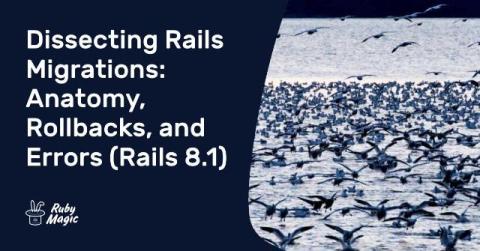
Dissecting Rails Migrations: Anatomy, Rollbacks, and Errors (Rails 8.1)

A Rails migration is a timestamped Ruby class inheriting from ActiveRecord::Migration whose change method alters the database schema. bin/rails db:migrate runs each pending migration once, records its version in the schema_migrations table, and dumps the result to db/schema.rb. Rollbacks invert change; irreversible steps need up and down. On PostgreSQL and SQLite, each migration runs inside a transaction.

How Intelligent Tech Website Design Streamlines IT Operations

In the modern enterprise, a company website is rarely just a digital brochure. It acts as the critical entry point for customer success workflows, support requests, and user onboarding. When digital architecture is treated solely as a marketing asset, it often leads to disjointed user experiences and operational bottlenecks for backend IT teams. Treating the front end as an operational tool changes this dynamic entirely. Investing in specialised Technology & SaaS Website Design ensures that web portals are built with intuitive self-service documentation, secure customer login areas, and seamless API integrations.

GA4 Alternative: What Engineering Teams Should Check Before Switching

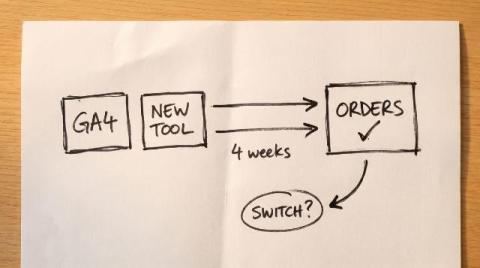
A GA4 report shows fewer purchases than the order system, a row says data was withheld, and the BigQuery export does not match the screen. Marketing wants to know which number is right, and the data team has to answer. Here is how to tell which GA4 limits you can fix in settings, which ones mean it is time for a GA4 alternative, and how to switch without losing a month of numbers.

Playwright End-to-End Testing with Recorded API Mocks

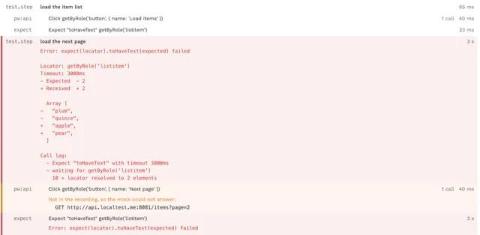
Your Playwright test clicks Next page, waits for the item list, and times out. Now you’re digging through a trace to find out whether the page broke or an API call failed. Traditional browser-testing workflows focus on clicks, page state and UI assertions. Those checks tell you whether a user journey works, but investigating a failure also means understanding the APIs behind the page.

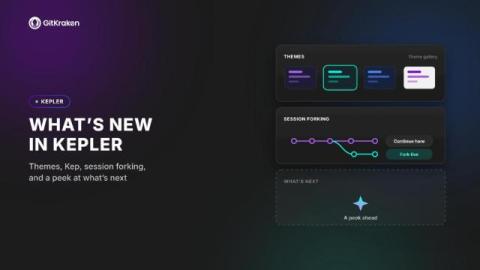
What's new in Kepler: themes, Kep, session forking, and a peek at what's next

Kepler has picked up a lot over the last few releases. So much, in fact, that Gyo, GitKraken’s Director of Engineering, had to trim his list before walking us through it. We sat down with Gyo and Jonathan, our Product Advocate, to go through the highlights. Gyo explained what shipped and why. Jonathan put the features to work live, building themes, cleaning up tasks, and forking a session from Claude to Codex. Here’s what we learned.

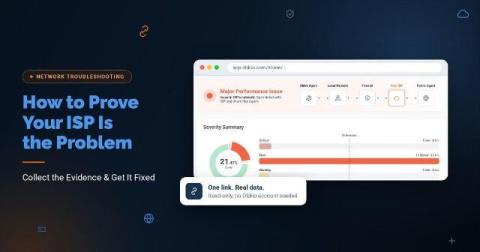
How to Prove Your ISP Is the Problem (With Data)

You call your ISP because calls keep dropping and the Internet crawls every afternoon. Support asks you to restart the modem. Then they test the line from their side, see nothing wrong, and tell you everything looks fine on their end. By the time a technician shows up, the problem is gone, and the ticket gets closed. The issue usually isn't that your ISP doesn't care. First-line support is trained to rule out the customer's network first, and most complaints arrive with nothing they can check.