Operations | Monitoring | ITSM | DevOps | Cloud

Sponsored Post

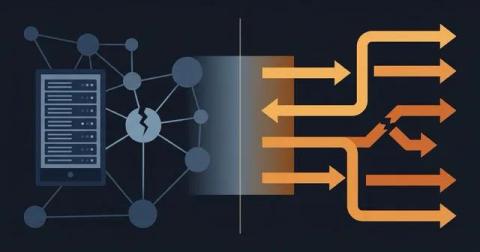
Chaos Monkey Won't Find Your Bug

We shipped a chaos feature that never caused any chaos. Our mock server has had a fault-injection effect for years with a straightforward job: withhold the response entirely and see whether the caller copes. Last week I audited it against the actual code path. It had never withheld anything. The handler returned early without writing a response. Go's net/http then did what it is designed to do, which is synthesize a 200 OK and flush the recorded body. Every experiment anybody ever ran with that effect handed the application a perfectly good answer, and every one of them passed.


The SAP Automation Advantage: What High-Performing SAP Teams Have in Common

Every Basis team has a list. The tasks nobody schedules because they get done by hand, by a Basis miracle worker who knows the sequence. System refresh. Parameter settings across multiple production systems. The cloud invoice with a number nobody can explain. The teams with a short list of manual tasks got there with automation. What separates them isn’t enthusiasm for automation as a concept.

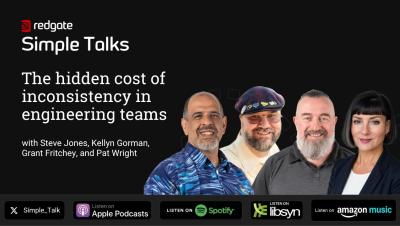
The hidden cost of inconsistency in engineering teams | The Simple Talk Podcast

Engineering teams' time and money are often drained by mismatched tooling and poor habits, among other things. The Redgate Advocates share their own stories of this in reality - from a mysterious 47-second retry, to the one 'rogue' engineer who derails a team. They also discuss how to get everyone pulling in the same direction without forcing everything to be identical, and whether AI helps or hurts.

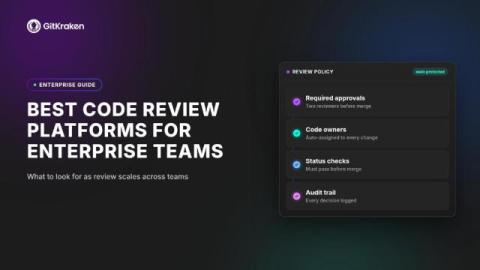
Best Code Review Platforms for Enterprise Teams

If your engineering team operates under compliance constraints, code review is about more than catching bugs. It’s where security policies get enforced, audit trails get documented, and institutional knowledge gets shared. Choosing the right code review platform determines how quickly your developers move from pull request to production. GitKraken gives enterprise development teams a unified DevEx platform that connects code review, pull request management, and collaboration into a single workflow.

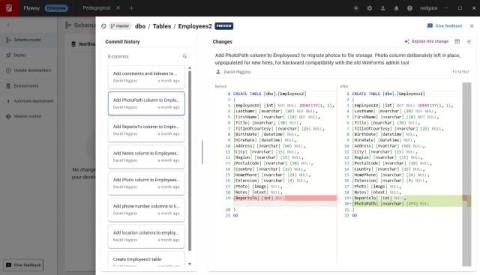
Every change has a story: introducing Object Level History in Flyway Desktop

You open a stored procedure to make what should be a quick fix, and something doesn't add up. There's a filter you don't recognize, or a column that has changed type, or a join that looks like it was added in a hurry. Who changed this? When? And, most importantly, why? We're excited to announce that object level history is now available for Redgate Flyway Enterprise users of Flyway Desktop.

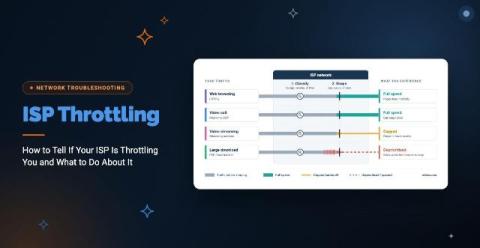
ISP Throttling: How to Tell If Your ISP Is Throttling You and What to Do About It

Your connection is fine in the morning and crawls every afternoon. Or video calls stutter while everything else loads normally. Either pattern could be ISP throttling. It could also be network congestion, or a problem inside your own network. ISP throttling is when your internet service provider intentionally slows your connection based on how much data you use, the type of traffic you send, the time of day, or the plan you’re on. Knowing throttling exists is the easy part. Proving it is harder.

The Heroku Experience for the AI Era

Ask a developer who used Heroku what they remember about it and you'll usually get some version of the same answer: you pushed your code and it ran. That feeling is back in the conversation, mostly because AI tools have made building software faster than its ever been. But speed was only half of the Heroku story. The other half, the part teams ran into a year or two later, matters just as much today.

AI wrote the code. Can you prove it followed the rules?

AI agents now write, review and ship code, and our supply-chain security can't tell how that code was made. A green build and a clean scan don't tell you which model or tools the agent used, whether it had your security guidelines, or whether a human actually reviewed the change. In this talk I introduce Agentic Process Evidence, a proposed open community standard. It records the AI development process as structured, signed evidence that is attached to the commit and linked back to the full agent session logs, so release policies can enforce it automatically as policy as code.

Are Open Source Models the Answer to AI Sovereignty? | Civo Navigate London

Open source models are closing in on the frontier. But is running them the same as being sovereign? David Sullivan explains why true sovereignty means owning the whole model lifecycle, and why that's where prototypes stall before production. James Faure shows how distilling small, task-specific models can slash costs. Dr Rosemary Francis argues it's ridiculous to use the most expensive model for every task, and that your harness and engineering process matter more than which model sits at the top of the leaderboard.