The latest News and Information on IT Networks and related technologies.
A NoSQL database provides a mechanism for data storage and retrieval, without using the tabular relations associated with relational databases. Originally referred to as "non-SQL" or "non-relational" databases, NoSQL databases are increasingly used in big data and real-time web application environments. NoSQL systems are also sometimes called “Not only SQL” to emphasize that they may support SQL-like query languages or sit alongside SQL databases in polyglot-persistent architectures.
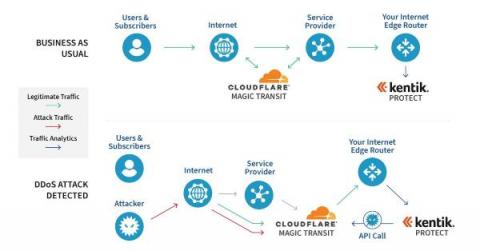
The rolling thunder of cybersecurity warnings has built to a crescendo this year. According to HelpNetSecurity, cybercriminals launched over 9.75 million DDoS attacks in 2022. The Cloudflare Attack Trends 2022 Q1 Report published yesterday shows an alarming increase in application-layer DDoS attacks. And our own Doug Madory has been sharing analysis on the impact of cyberattacks, too.
Remote network monitoring is a technical specialty that was born almost at the same time as networks themselves. Since then, many strategies have emerged when it comes to monitoring network elements. In this article we will talk about the current techniques based on SNMP polling and network statistic collection through Netflow, and we will also mention outdated systems such as RMON. Most techniques are purpose-oriented, so they are especially useful.
If you own an enterprise, then you know the value of a healthy network and how seriously detrimental a network outage is to your business. But network issues are inevitable. The heavy dependence on networks to meet the ever-changing client and internal usage requirements takes a heavy toll on the network. This makes networks vulnerable to common problems such as unplanned, sudden downtime, high resource utilization, and hardware malfunctioning.