Monitoring the Windows devices in a network is difficult yet essential since the devices are tasked with the critical functioning of the network. The challenges and complexity increase multi-fold for an enterprise network because each device is associated with many events, services, and processes that must be monitored to ensure the hassle-free operation of both the devices and the network. The devices should be monitored constantly by a network monitoring tool.

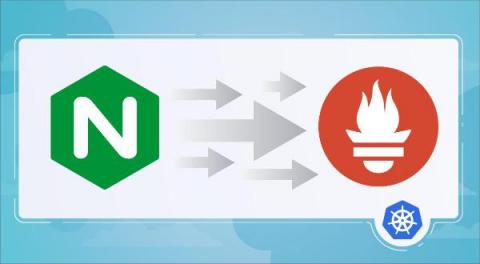
nginx is an open source web server often used as a reverse proxy, load balancer, and web cache. Designed for high loads of concurrent connections, it’s fast, versatile, reliable, and most importantly, very light on resources. In this article, you’ll learn how to monitor nginx in Kubernetes with Prometheus, and also how to troubleshoot different issues related to latency, saturation, etc.

It’s been a long few years for your IT department. In the span of one month, you had to make sure that all employees and contractors could work remotely. This meant giving everyone access to all cloud resources and ensuring uptime. Then, you needed to start securing access. Now, you need to shore up all your security as the phrase “zero trust architecture” has recently entered conversations with leadership.
To say that K-12 school systems have challenges is an understatement. COVID forced schools to make a dramatic turn towards remote learning, which meant the network was anything but insular, forcing IT to efficiently support thousands of new remote endpoints. That is on top of other K-12 network challenges. Issue number one: tight budgets. Most school systems are tight for cash, especially after the financial stresses of COVID and all the millions spent on PPE.
Even reducing the loading time of our website by a second can have a drastic impact on the traffic we get. It is vital for our websites to load quickly in this fast-moving world, where all the information we need can be found within a blink of an eye. One way to achieve it is using Gzip compression. The Gzip algorithm compresses and decompresses data in order to make websites load faster in a client's machine.
In our on-demand webinar, Obkio’s network pros go over our network diagnostics process of how to locate and troubleshoot live network issues faster easter with Obkio network performance monitoring vs. traditional monitoring solutions. Networks are changing, and monitoring solutions need to keep up.
In our quest to provide the leading network observability solution, Kentik has been focused on developing a service for NetOps teams that empowers them to have intimate knowledge of their network traffic and the devices that route traffic. Our service helps them plan capacity, project costs, optimize routes, detect unwanted traffic, troubleshoot issues and analyze events.
It was really great to see so many old friends again at Cisco Live this year in Las Vegas. It’s been a few years since I’ve been to a conference other than a few small work events, so it was exciting to wander the World of Solutions, talk to people at the many booths, and bump into people I knew online but never met in person.
A network provides a way for many computers to all be connected and exchange data with each other simultaneously. It allows members of organizations to quickly complete tasks, share information, and carry out any computing responsibilities that rely on a working network. It’s important for each organization to ensure that their network design is suitable for their needs.
Network configuration entails setting up your network to support local or remote network communication. This configuration allows for wired or wireless connection and entails the installation of network hardware, software, and devices. In this article, let’s take a look at network configuration, including the benefits, various types and tools, and how to monitor and manage the network.
This is the first blog in a three-part series about service providers and network compliance.
Monitoring your on-premise or hybrid infrastructure means keeping track of potentially thousands of devices, any one of which could be a point of failure. Additionally, silos between application and network teams can create visibility gaps that complicate troubleshooting. For network engineers investigating bottlenecks, being able to view real-time infrastructure health and performance data alongside application metrics is essential for ensuring their organizations meet key SLOs.
On Tuesday, June 7, internet users in numerous countries from East Africa to the Middle East to South Asia experienced an hours-long degradation in service due to an outage at one of the internet’s most critical chokepoints: Egypt. Beginning at approximately 12:25 UTC, multiple submarine cables connecting Europe and Asia experienced outages lasting over four hours. As I show below, the impacts were visible in various types of internet measurement data to the affected countries.
HAProxy Kubernetes Ingress Controller provides custom resources named Backend, Defaults, and Global that let you manage ingress controller settings more efficiently. To start using them right away, check the documentation for steps and examples. In this blog post, you’ll learn why custom resources are such a powerful feature and see tips for getting the most out of them.
I often hear from customers who complain about how “classic” performance testing (i.e., end-to-end testing with high volume of virtual users) of their applications before release slows down the cycle time by several weeks. In addition, the testing significantly consumes both people and infrastructure (hardware and software license) resources.
Many users are familiar with the concept of network ping. Especially those who like online games. If you are having connection problems, the most reliable way to check it is to use the "ping" command. But not everyone can answer what a ping really is. In simple words, it is a measure of the time it takes for a network request to get from user to server and back.
IP Blacklists contain ranges of or individual IP addresses you want to block. A blacklist can be used in combination with firewalls, intrusion prevention systems (IPS), and other traffic filtering tools. With the recent developments in cyber security, organizations are increasingly relying on IP blacklisting to protect their networks.
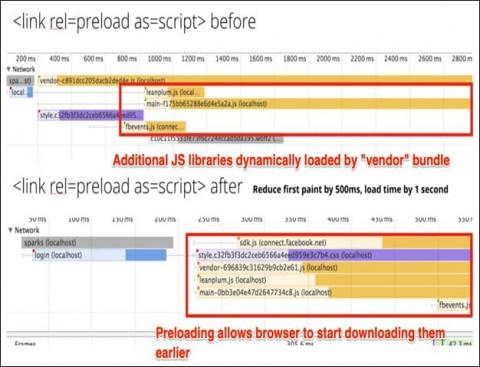
Preloads are a powerful optimization technique that can make significant improvements to crucial performance metrics such as Core Web Vitals. I have written on prefetching a DNS lookup or even preconnecting to a domain. Preloading is a much more powerful extension of these concepts because it enables you to download entire resources in advance. In this article, let’s look at.
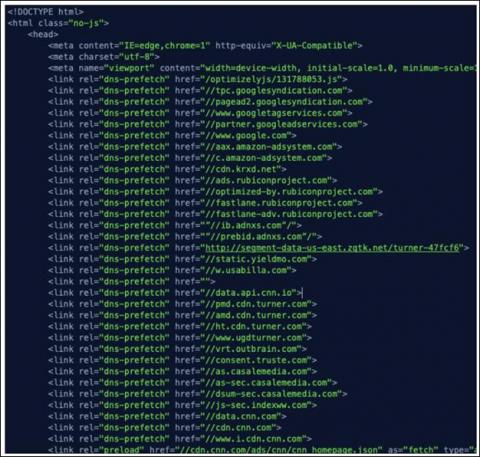
This article helps you understand DNS prefetching, one type of resource hint, including what they are, why and how to use them, and best practices for auditing and scaling them.
In this article, let’s take a look at preconnect resource hints — what they are, why and how to use them, and best practices for auditing and scaling them.
Since the beginning of the Internet, the speed of delivering content has been an issue. While processor enhancements, network acceleration, and web frameworks have brought drastic improvements to performance, the goalposts have continued to shift further away; devices operate on wireless connections with limited bandwidth, and the Internet is accessed from every corner of the globe.
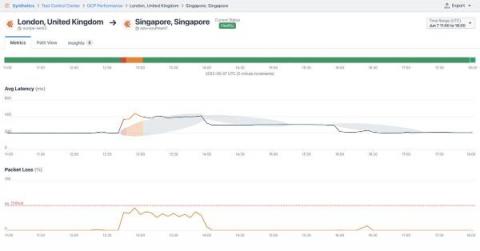
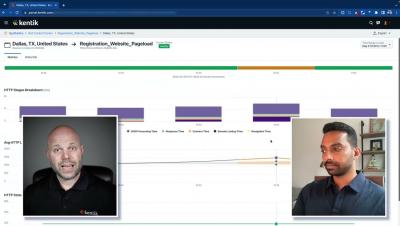
Kentik Synthetics is all about proactive monitoring. With synthetic monitoring, you can investigate users’ digital experience by peeling back, layer by layer, exactly what’s going on in every aspect of the digital experience from the network layer all the way to application. Because synthetic tests can be so granular, the results provide different information than you can get from flows, streaming telemetry or other observability data.
This is our first blog in a three-part series, where we demonstrate the many features and benefits of using Restorepoint and the ScienceLogic SL1 Platform together. Today’s demo takes you through a network breach scenario—showing how to identify and remediate following an unplanned network device change.
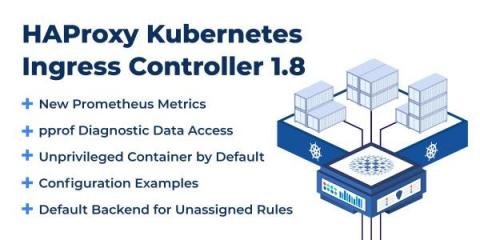
We’re proud to announce the release of version 1.8 of the HAProxy Kubernetes Ingress Controller! In this release, we added support for full rootless mode, Prometheus metrics for the controller itself, and examples that are synchronized with our Helm chart. In this blog post, you will learn more about the changes in this version. Register for our webinar to learn more about this release.
Learn more - https://rbbn.com
0:00 Intro to Voice Threat Prevention
4:04 Agenda
4:54 Voice Threats to Enterprises
16:29 Ribbon Voice Threat Prevention
41:31 Voice Threat Prevention Packaging and Pricing
Exoprise customers are already enjoying the full benefits of 24*7 active monitoring for their enterprise applications. Don't believe us? Take a look at one of our case studies. While synthetic monitoring (aka Active Monitoring) is great for proactively detecting SaaS, network, and Internet outages, the IT world has now switched to Digital Experience Monitoring (DEM) solutions. Thanks to Covid, that took the world by storm.
DevOps is a composition of enhanced engineering practices that reduce lead time and increase the frequency of delivery. The primary goal of DevOps is to ensure operations team members are engaged and collaborating with development from the very beginning of a project or product development. Within many enterprises, teams are being compelled to reassess the security of their DevOps implementations. Recent news on vulnerabilities like Sun Burst and Log4j underscore why this is so critical.