Operations | Monitoring | ITSM | DevOps | Cloud

The latest News and Information on Log Management, Log Analytics and related technologies.

What is the Benefit of Including Security with Your Observability Strategy?

Observability strategies are needed to ensure stable and performant applications, especially when complex distributed environments back them. Large volumes of observability data are collected to support automatic insights into these areas of applications. Logs, metrics, and traces are the three pillars of observability that feed these insights. Security data is often isolated instead of combined with data collected by existing observability tools.

A Beginner's Guide to Structured Logging

Structured logging is a methodical approach to log management in software development, often utilizing JSON or key-value pairs. This method enhances the comprehensibility and analytical efficiency of log data, particularly in complex and distributed system environments. Unlike unstructured logs, which lack a defined format, structured logs adhere to a standardized layout, facilitating streamlined analysis and troubleshooting.

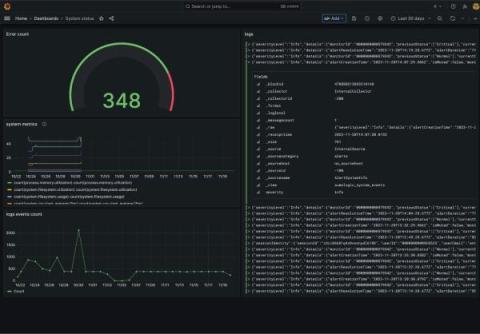
Visualize Sumo Logic metrics and logs with Grafana: Introducing the Sumo Logic Enterprise plugin

We are thrilled to announce the addition of a powerful new Enterprise plugin in the Grafana ecosystem: the Sumo Logic Enterprise data source plugin for Grafana. You can now easily connect Sumo Logic to your Grafana instance and correlate your log data with telemetry from all your data sources in one unified Grafana dashboard.

Delivering Value with a Flat Budget

Join us for an important conversation with Cribl's Ed Bailey and Jackie McGuire, as we navigate the intricate balance of maximizing organizational value with a constrained budget. In today's challenging economic climate, where maintaining operations often means minimal to no additional spending, adaptive strategies become crucial. This is more than just a best-case scenario; it's a necessary approach for business resilience. Ed and Jackie will share innovative ideas and strategies to help leaders skillfully manage tight budgets while delivering significant value to their organizations.

Dashboard Studio Feature Highlights in Splunk Enterprise 9.2

With every major Splunk Enterprise release, we level up your dashboarding experience so that you can visualize and take action on your data fast. In Splunk Enterprise 9.2, we are bringing the experience across Classic (SimpleXML) dashboards and Dashboard Studio closer together and weaving in Dashboard Studio features from the two most recent Splunk Cloud Platform releases. This blog post covers the major dashboarding features included in Splunk Enterprise 9.2.

Let's Put on a Show With Cribl's Search Sandbox!

Remember when you were a kid and your school put on a production of the latest grade school drama? Maybe you didn’t get the lead role, but it was fun to put on (or watch) the show. Search Sandboxes are just like that! Except you get to be the stage manager when searching data. And Search Sandboxes offer you everything you need to make it an all-star performance.

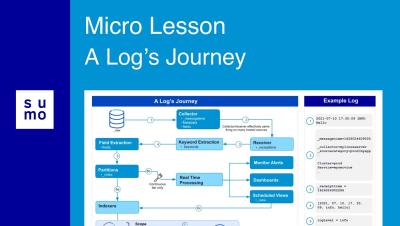
Micro Lesson: A Log's Journey

Meet Rick Jury, Senior Technical Account Manager at Sumo Logic. In this video, Rick talks about the ingestion pipeline and the journey that a log message takes from collection into the Sumo platform, and considerations for administrators around the ingestion pipeline. You will be excited to see how this translates into a search, turning a raw event into a schema and then into actual insights.

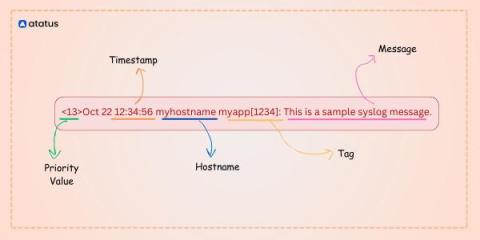
Understanding Syslog Formats: A Comprehensive Guide

Syslog, short for System Logging Protocol, is a standard protocol used to send log messages and event notifications across a network. It plays a crucial role in monitoring and managing the health, performance, and security of systems and applications. Syslog was originally developed as a part of the BSD operating system, but many other operating systems and network devices have since adopted it. One of the key aspects of syslog is its flexible and standardized message formats.