Operations | Monitoring | ITSM | DevOps | Cloud

From Answers to Assets: Open 360 AI Chat Can Now Create Your Alerts and Dashboards

Open 360 AI chat can now do more than investigate and explain. With new Logz.io API skills, the agent can create and manage Open 360 and Cloud SIEM objects, such as alerts and dashboards, directly from the conversation. Find an error pattern worth watching? Ask the agent to create the alert. Need a view of a service you just investigated? Ask for the dashboard. The insight and the follow-through now happen in the same place.
Trace an AI SRE Agent: AURA Docker Quickstart with Phoenix and OTel

You get an answer from the agent and no way to check how it got there. The route it took is recorded, and so is the reason it gave for taking it. AURA emits OpenTelemetry spans, and the Docker quickstart wires them straight into Phoenix. Four services come up together: AURA Web Server as the persistent agent harness, LibreChat as a browser interface for chatting with the agent, Phoenix to receive the spans, and MongoDB to store stateful data for LibreChat. The Compose file arrives pre-configured to point AURA at Phoenix and to enable content recording for the local demo.

Recurring Office Hours with the AI SRE Agent Team Behind AURA

Building an agent and not sure how to approach something? Bring it. AURA office hours are recurring working sessions with the people who build it. The team has been talking to people trying out AURA and hearing the same good questions come up more than once. Office hours are the answer to that: a standing slot on a schedule, rather than one conversation at a time. The format is deliberately loose. Nobody is arriving with thirty slides to spend an hour talking at you. The session goes wherever the questions go.

Why AURA Scratchpad Is Rad: Bound the AI SRE Agent Context Window

A big tool result does not have to be a big context cost. AURA moves it to disk and hands the model a pointer plus the tools to navigate what is there. A large MCP tool result can consume or overflow an agent's context window, and on a third-party server you do not control how much comes back. Scratchpad breaks the link between how big a tool result is and how much context it costs: the full output goes to disk, and only the slice the model asks for ever enters the window. Errors always pass through inline, so the model can react to them.

7 lessons for IT leaders on using observability to monitor AI applications

What it takes to prove AI value with LLM observability Over six months, the Elastic IT team ran internal AI applications that returned $2.5 million in operational time to the business.1 A conversational support assistant moved us from zero digital resolution, where anything complex became a ticket, to 30% of support interactions closing without one.

Multi-Agent Orchestration for SRE: AURA Runs a Model per Specialist

Give one agent every tool and every incident is a question of trust. This one hands each job to a worker that can only reach what that job needs. One AURA configuration defines a coordinator and three specialist workers. Qdrant stores the runbooks, Prometheus measures workload health, and Kubernetes provides inspection and remediation, and each of the three is wired to one worker.

Full-Pipeline Blueprints Are Here: Source, Processors, and Destination in One Click

Blueprints launched as processor bundles, and that solved the repetitive middle of the problem. But the middle was never the whole job. You still had to know which source type to add, which parameters mattered, how to batch for your backend, and how to route it all together. That changes now. The first two cover the two requests we hear most.

From alert to answer: a hands-on investigation with trace analysis in Mezmo

Authored by Sven Delmas, VP of Research at Mezmo I wanted to know what Mezmo's new trace features feel like with real telemetry behind them, so I built the smallest honest rig I could: the OpenTelemetry demo application running in a local Kubernetes-in-Docker cluster on my machine, one collector, and one deliberately simple Mezmo pipeline.

SEO isn't just a marketing KPI anymore. It's a security one.

On this episode of Masters of Data, we sat down with Patrick Kobly, who runs security for a boutique MSSP serving fintech, crypto, and gaming clients, to dig into how phishing has evolved past the obvious tells. Kobly walks through how attackers spin up reverse proxies behind Cloudflare, route through residential IPs to dodge reputation-based blocking, and can take a fake domain from registration to full attack in under five hours. The conversation turns into an unexpected case for treating SEO as a security discipline, since search rank and AI-generated results are now part of the attack surface too.

Splunk Pricing in 2026: Full Cost Breakdown (and How to Cut It)

Splunk charges you in one of two ways: by how much data you send it each day, or by how much compute your searches and dashboards use. Security teams pay for both the platform and Splunk Enterprise Security, the app that turns Splunk into a SIEM, which is priced separately on top. This guide breaks down every part of a 2026 Splunk bill, works through a real, sourced pricing example, and lays out the ways to bring the number down, including the one lever many teams overlook.

From retrieval to agents: 5 takeaways on production architecture for AI agents

How context engineering creates production-ready agentic AI What if the AI strategy you spent the past year building is already being measured by a completely different set of rules? I recently joined Amy Machado, senior research manager at IDC and Jim Malone, senior contributing editor at CIO Marketing Services, for a webinar where we explored how buyer expectations, architectural requirements, and evaluation criteria are shifting as enterprises move from search-driven experiences to agentic AI.

Olly says Hi: Scheduled tasks now report to Slack and email

An agent that only speaks when spoken to is a tool you have to remember to use. Olly has run on a schedule for a while now, working a saved prompt hourly, daily, weekly, or monthly and writing its findings into a chat with its own run history. Those scheduled tasks are now wired into the Coralogix Notification Center, so Olly delivers that output itself, allowing Olly to reach out to Slack or email, out of the box.

Making Machine Data Easier to Onboard, Prepare and Trust with AI-Powered Data Management

Every investigation, detection, dashboard, and AI-assisted workflow depends on one thing: data that teams can trust. But as environments grow more distributed, the data behind those experiences gets harder to manage. New applications, cloud services, security tools, infrastructure, and network devices constantly generate machine data, and each new source can introduce new formats, missing fields, inconsistent mappings, and pipeline changes that require expert attention.

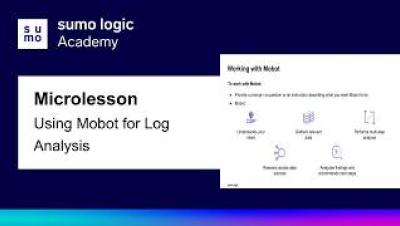
Microlesson: Using Mobot for Log Analysis

This video demonstrates how to use Mobot to investigate issues, interpret its findings, and identify recommended next steps. Follow along as Mobot responds to a prompt by understanding your intent, gathering relevant data, performing multi-step analysis, reasoning across data sources, surfacing insights, and recommending next steps.

Run an AI SRE Agent Entirely Inside AWS with Bedrock and S3: AURA

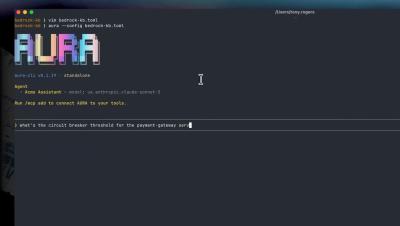
An on-call question returns the threshold and the escalation owner from your own runbooks, and the answer comes back without a call to anyone outside. AURA runs against Bedrock as its model provider, using Claude Sonnet 5 served by AWS in the same region. Authentication is the normal AWS credential chain: a profile on a laptop, an IAM role in EKS.

What is going wrong with AI coding? Live Laugh Logs ep. 4

Welcome to Episode 4 of Live Laugh Logs, the podcast from the Coralogix Developer Relations team. This week, Chris Cooney joins Annie to share five key DevOps skills that have become even more important in the age of agentic code development, and gives you five key actions you can do today to start levelling up these skills. Subscribe to our channel for more insights into observability and AI.

Builder in the loop: what production agents were missing before AURA

Builder in the loop is a Mezmo interview series with the engineers, product leaders, and operators shaping AURA. Each installment looks past the product layer to explore the decisions, tradeoffs, and lessons involved in building agents for real production work. This installment features Mike Shearer, the engineer who built AURA and, until recently, its only developer. AI agents are easy to believe in when the task is small.

What an AI SRE agent actually finds when you point it at a broken Kubernetes cluster

‍ Most of the AI features that shipped into observability tools this year summarize alerts. You get a paragraph that restates the dashboard you were already looking at, and the agent never reads the cluster itself, because giving it cluster access is a security conversation nobody wanted to start. This walkthrough starts it.

No Custom Adapter: AI SRE Agent AURA Debugs Product Catalog in Dash0

The platform shows you which service is failing and which paths it touches, and stops there. Point AURA at the same telemetry and the cause comes back too. Dash0 shows the product catalog service in a failed state across the selected window, with errors on the path from the frontend service.

Kubernetes AI SRE Agent Finds a Crash Loop Nobody Asked About: AURA

You ask for a routine health check and expect a clean baseline. What came back was a pod that had restarted 788 times, unrelated to the question. AURA is connected to a Kubernetes cluster and to Prometheus through read-only MCP servers, running as one coordinator with two specialized workers. The prompt is one sentence: check the health of the cluster, and confirm whether all the pods are running. What comes back is not a baseline. AURA names the state as CrashLoopBackOff and attaches the restart count to it.

OpenTelemetry at the edge: Observability for IoT fleets with Bindplane and Dynatrace

By the time an IoT device shows up in an incident review, it has usually already done its damage. Not the dashboard-gap kind. These devices are load bearing. They sit in the control path of substations, haul trucks, pump stations and cold rooms, so when they go blind the blast radius gets measured in tripped relays, spoiled stock, and unplanned outages rather than in missing datapoints.

From Log Line to Merged Fix: AI SRE Agent AURA with GitHub MCP

Knowing why it broke is not the same as having it repaired. Point the agent at the repos behind the service and the change comes back as a pull request. A Govee integration crash-loops under Home Assistant because the container cannot write to a directory it does not own. That much was already established: the previous homelab video stopped at the root cause on purpose, so the next pass could improve the agent's configuration first.

Introducing Coralogix Product Analytics

Coralogix Real User Monitoring has spent years collecting full-fidelity user sessions: every session and event processed in stream, without sampling and without prior indexing, at rest in cloud object storage you own. Today that data does a second job. Product Analytics brings heatmaps, funnels, and pathways to the RUM sessions you already send, with no second SDK to install. One dataset now answers what your users did and why it happened.

A comprehensive guide to Fly.io logging

Deployment is not the end of shipping your application. From time to time, you will get errors that you will need to attend to. Without a good method of catching errors or logs in general, you could end up with uncaught issues that might cost you valuable customers in the process. In this article, you will learn how to catch logs for an application deployed on Fly.io. You will learn how Fly.io logging works, then learn ways to handle logs natively on the platform.

Agent Mode Engaged! Enchaining Agentic Operations with Splunk AI Assistant 2.0

In this session, we will introduce your new "digital teammate"—the supercharged Splunk AI Assistant. We’ll demonstrate how the new Agent Mode provides the context, reasoning, and recommendations necessary to reduce your mean time to resolution (MTTR) from hours to minutes.

Boost Productivity with SPL2: The Next-Gen Language for Splunk

Tech Talk features a live demonstration of the new SPL2 Search Mode and explores how to leverage SPL2 modules and apps to streamline your investigations. Whether you are building custom solutions or investigating security threats, learn how to turbocharge your use cases with a flexible language that supercharges our original SPL.

Build and Launch AI Agents from Your Splunk Workflows

Introducing the Splunk Agent Launchpad! Let’s face it—your team is busy. Between managing alerts, digging through investigations, and constant context-switching, it’s hard to stay ahead of the noise. What if you could turn your existing operational knowledge into custom AI agents that do the heavy lifting for you? And the best part? No coding required. Watch this exclusive look at the Splunk Agent Launchpad. We’re showing you how to build, deploy, and manage AI agents that help you investigate, enrich, summarize, and act—all without leaving the Splunk environment you already know and trust.

Argo CD Deployment Failed: AI SRE Agent AURA Finds and Fixes It

A deployment fails validation and the sync stops. Argo CD hands the report to AURA, which finds the wrong version, fixes it, and re-runs the sync. Normally, a failed sync means a person opens the application, reads the hook logs, and works out which value is wrong. Here, the sync fail hook sends AURA a short failure report and an incident ID over the agent-to-agent protocol, then exits. It does not say how to investigate or what to change.

Set a monthly budget on every Olly API Key

FinOps spent a decade making cloud spend predictable, and teams now point the same discipline at a workload that behaves nothing like a virtual machine. In the FinOps Foundation’s State of FinOps 2026 survey, drawn from 1,192 practitioners representing more than $83 billion in annual cloud spend, 98% now manage AI spend, up from 31% two years earlier. The main driver for this was agents.

Introducing the new Coralogix Metrics Engine

Coralogix has spent years building metrics infrastructure that handles high cardinality and high dimensionality without flinching, with governance, usage visibility, and cost optimization built into the platform, and recognized industry delivery to show for it. Today that infrastructure takes its biggest step yet. We have rebuilt the metrics engine from the ground up, with a new pricing model, a set of new capabilities, and a tripled fair usage allowance to enjoy them in.

What's new in Sentry Logs: The summer 2026 roundup

We got a little behind on updating our changeLOG, so we’re dumping it all into this bLOG post instead. Think of it as one giant, retroactive changelog entry or, if you want to be dramatic about it, one massive prompt injection straight into your feed. Either way: here’s everything that shipped for Sentry Logs this summer. Would you rather listen to the team talk about what they built? Check out this video where Kyle and Josh talk about the latest updates on Logs.

AI SRE Agent Debugs a Lambda Timeout with the AWS MCP Server: AURA

A scheduled Lambda quietly stops completing and nothing pages you. AURA finds the function, reads its logs, and comes back with a three-second timeout. The usual path is opening the console, tracking down the right log group, and reading CloudWatch by hand. Here AURA connects to AWS through the MCP proxy AWS publishes, run locally with uvx against an AWS CLI that is already configured, so there are no new credentials to issue.

The Great Telemetry Debate: Why AI-Ready Operations Require a True Data Fabric

If you are leading technology strategy today, you face consequential choices about how to manage your enterprise telemetry. Your decisions determine not only where logs, metrics, traces, and events are stored, but also who controls how operational data is collected, shaped, governed, and put to work in an optimal way for the security, observability, analytics, and AI systems that power your business.

How to Reduce Data Costs with OpenTelemetry and Bindplane

Originally written by Paul Stefanski, updated by Dylan Myers. Data costs fill a large column in many organizations' accounting sheets. Data pipeline setup and management is a significant time sink for DevOps, IT, and SRE. Setting up telemetry pipelines to reduce unwanted data often takes even more time, which could better be spent creating value rather than reducing costs. This post will show you how to quickly set up your data pipeline to filter unnecessary telemetry data.

Scheduled Autonomous AI SRE Agent as a Kubernetes Guardian: AURA

Some agent work should pause for a person. This is the other case: a health check every two minutes, one bounded action, and a result nobody approved. Each scheduled run starts the normal AURA image in one-shot mode: check one workload, act if something is wrong, write the result to the job log, and exit. Overlapping runs are forbidden.

Paste a Slack Bug Report into an AI SRE Agent: AURA Finds the Cause

A coworker says checkout is broken and nothing else. That is the whole prompt. AURA reads the live logs and comes back with the payment service. Normally a message like this is the start of guessing at a service and opening dashboards until something looks wrong. Here it is the entire input: no service named, no error string, no time range.

Homelab AI SRE Agent: AURA Debugs Container Permissions in Docker

A root cause is not a fix. AURA keeps working the problem, taking what you find on the host and coming back with the user ID mismatch behind the failure. What follows a root cause is normally manual: check the mount, compare ownership on the host against the user inside the container, and get it wrong at least once before it lands.

Open Source AI Agent for SRE: Why AURA Is Free

The most common question since we started 31 Days of AURA: how do you plan to make money? The short answer is the control plane, not the agent. Mezmo sells an enterprise-grade control plane for running large numbers of agents across large environments, where coordinating across environments, governance, access control, and the efficiency of preprocessing MCP data start to matter. If a hundred people run AURA and three or four of them need that, the model works. The more people running AI agents in production, the bigger the market for the tooling underneath them.

Free Open Source AI Agent for SRE and More: Why We Give AURA Away

Wondering what the catch is on a free, vendor-backed agent? There is not one in the license. AURA stays Apache 2, fully capable, and free to run. If you are weighing an open source tool with a company behind it, the first question is what the catch is. You have seen the project that turns out to be open core, or that is quietly hindered in one key way. This is Mezmo's answer for AURA.

Install an AI SRE Agent in Kubernetes with AURA and Helm

AURA does not have to live on your laptop. Install it into the cluster with Helm and it is still there the next time something breaks. AURA is a fully open source AI agent built specifically for SRE work. Rather than one general assistant, you configure workers: separate agent roles, each scoped to a job like inspecting the cluster.

Building trusted agentic AI in financial services: From data to autonomous action

As financial institutions move from AI experimentation to autonomous operations, trusted context, governance, and observability become the foundation for enterprise-scale Agentic AI. Artificial intelligence in financial services is entering a new era. Historically, financial services companies have focused on deploying generative AI to improve productivity, enhance customer experiences, accelerate software development, and streamline operations.

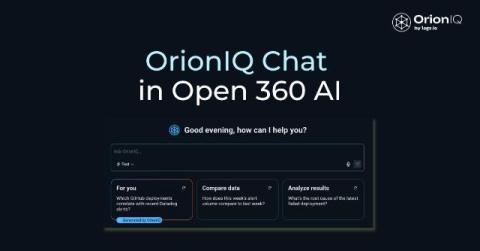
Open 360 AI's chat is now powered by OrionIQ

OrionIQ’s agentic investigation is now built into Logz.io Open 360 AI. Ask a question and OrionIQ investigates across your telemetry, shows its work as it goes, links every finding back to the exact query behind it, and tells you how much to trust the answer. Today we’re bringing OrionIQ Chat into Open 360 AI. This is the first OrionIQ product to ship inside the Logz.io platform, and it’s the same agent that powers the standalone OrionIQ app, now available right where you already work.

From Vision to Value: New Splunk Platform Innovations Supporting Cisco Data Fabric Are Generally Available

At.conf25, we announced our vision for Cisco Data Fabric, an architecture designed to help organizations unlock the value of machine data, fuel AI with trusted context, and support more intelligent and resilient operations. Today, that vision has become reality. Key Splunk Platform innovations including Machine Data Lake, Catalog, and Agent Launchpad, together with expanded Federated Search and Data Management capabilities, are now generally available.