Operations | Monitoring | ITSM | DevOps | Cloud

The latest News and Information on DevOps, CI/CD, Automation and related technologies.

India's DPDP Act: What it means for where you host your data

India's Digital Personal Data Protection Act, passed in 2023 and enforced through subsequent rules, has reshaped the landscape for data hosting decisions for anyone processing personal data of Indian residents. The Act creates specific obligations that map directly onto infrastructure choices: where data can be stored, how consent has to be managed, what security measures are required, and what happens if things go wrong.
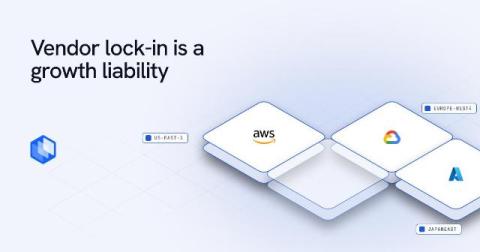
The Case for Multi-Cloud: Why Vendor Lock-In Is a Growth Liability

Multi-cloud architecture protects engineering organizations from three compounding liabilities that single-cloud stacks accumulate silently: a narrowing hiring pool, data residency exposure that surfaces the moment you sign a regulated enterprise customer, and eroded pricing power at exactly the point your cloud spend is accelerating fastest. Redundancy is a side benefit, not the reason to adopt it. The redundancy argument for multi-cloud is the wrong argument to make early.

The MetricFire MCP Server | AI-Powered Monitoring

Monitor your infrastructure using natural language with the new MetricFire Model Context Protocol (MCP) Server. In this video, you'll learn how to connect the MetricFire MCP Server to AI assistants like GitHub Copilot and use simple prompts to search metrics, visualize data, create alerts, and manage your monitoring environment—without writing API calls. In this video, you'll learn how to.

Safer Pipeline Changes, Flexible Deployment, and More

August 5, 2026 The latest VirtualMetric DataStream release focuses on how pipeline changes move from idea to deployment, safely and without slowing teams down. Version 2.1 puts a deliberate step between building a pipeline and shipping it to production, along with new deployment options for Directors and multi-tenant ingestion for teams managing data across many customers. Here’s what’s new.

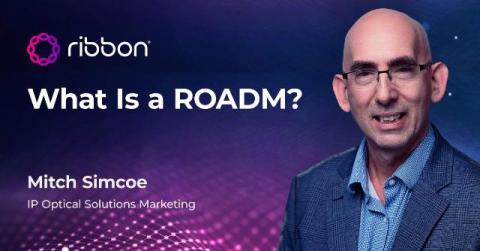
What Is a ROADM?

A Reconfigurable Optical Add-Drop Multiplexer (ROADM) is a network element that selectively routes specific wavelengths of light across a fiber optic network without converting the signals into the electrical domain, forming the very foundation of modern optical transport networks. It allows operators to manage data traffic dynamically at the photonic layer. Fixed OADMs came first.

GPU Cloud security: Isolation, multi-tenancy, and protecting sensitive training data

GPU cloud security tends to get discussed as if it's the same problem as general cloud security. It isn't. GPUs sit between processes in ways CPUs don't. Training data passes through them in patterns that create specific exposure. Model weights derived from sensitive data are themselves sensitive material in ways most procurement processes don't recognize. And the multi-tenant nature of public GPU cloud creates failure modes that don't exist in CPU-only environments.

Inference Optimization Techniques. Ray vs. vLLM vs. KubeRay

Serving large language models at scale is fundamentally a distributed systems problem. A single GPU, or even a single node, is rarely enough once you need multiple models, multiple replicas, tensor-parallel sharding across GPUs, or high-availability rollouts. Kubernetes solves general container orchestration well, but it has no native concept of a GPU-aware, actor-based compute cluster.

Ai4 2026: Measuring AI spend is solved. Now it's time to prove its worth.

CloudZero had a full team on the ground at Ai4 in Las Vegas during the first week of August 2026. The team included CTO Erik Peterson, who spoke on a panel about AI cost economics. The same problem surfaced everywhere we went: teams can see what they’re spending, but not whether it’s working. DIY cost tooling that fails time and time again, agent sprawl, and a widening gap between finance and engineering kept coming up throughout the week.

What are AI tokens? The unit your AI bill is written in

AI tokens are the small chunks of text, roughly four characters or three quarters of a word each, that language models read and generate. Every prompt and every response is measured in tokens, and AI providers bill per million of them. That makes the token the base unit of AI spend: 1,000 tokens is about 750 words, and every AI feature you ship is a token meter running.

What is AI ROI? Definition and why it matters

In 2025, 85% of organizations increased AI investment, and 91% plan to do the same this year, according to Deloitte. Despite continued spending, however, ROI lags behind, with just 6% seeing payback within one year. While AI use cases tend to have a longer payback period, often in the 2-4 year range, companies can’t afford to keep spending money without some measure of its practical impact both immediately and over time.