Operations | Monitoring | ITSM | DevOps | Cloud

The latest News and Information on DevOps, CI/CD, Automation and related technologies.

Securing open source through CVE prioritisation

According to a recent study, 96% of applications in the enterprise market use open-source software. As the open-source landscape becomes more and more fragmented, the task to assess the impact of potential security vulnerabilities for an organisation can become overwhelming. Ubuntu is known as one of the most secure operating systems, but why? Ubuntu is a leader in security because, every day, the Ubuntu Security team is fixing and releasing updated software packages for known vulnerabilities.


How Domotz streamlined provisioning of IoT devices

As the number of IoT devices scale, the challenges of provisioning and keeping them up to date in the field increases. Domotz, who manufacture an all-in-one, network monitoring and management device for enterprise IoT networks, found themselves with this challenge that was further compounded by their rapid software release cadence. One of the most crucial and difficult aspects for Domotz to solve was the delivery of automatic updates to the tens of thousands of devices deployed.

Challenges using Prometheus at scale

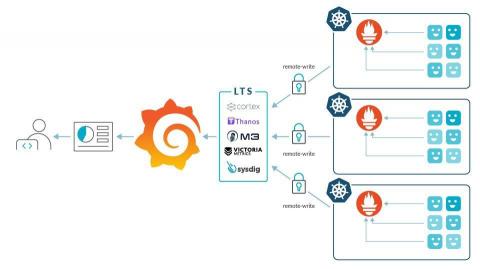
This article will cover the most common challenges you might find when trying to use Prometheus at scale. Prometheus is one of the foundations of the cloud-native environment. It has become the de-facto standard for visibility in Kubernetes environments, creating a new category called Prometheus monitoring. The Prometheus journey is usually tied to the Kubernetes journey and the different development stages, from proof of concept to production.

Runtime Security in Rancher with Falco

Runtime security for Rancher environments requires putting controls in place to detect unexpected behavior that could be malicious or anomalous. Even with processes in place for vulnerability scanning and implementing pod security policies and network policies in Rancher, not every risk will be addressed. You still need mechanisms to confirm these security barriers are effective and provide a last line of defense when they fail.

Tutorial: Shipping Docker Metrics to Logz.io

Docker is an essential bridge in modern DevOps. Despite Kubernetes overtaking Docker on orchestrating containers, the Docker container itself remains the standard and likely will for the foreseeable future. We developed the Docker Metrics collector to operate as its own container that will run Metricbeat using the modules you are running in real time. Now, in addition to the Docker module, we are now releasing an AWS module for operations in the cloud.

IAM Access in Kubernetes: kube2iam vs kiam

IAM is the de-facto method of authorization in AWS. Most Kubernetes “Quick Start” guides for AWS do not adequately cover how to manage IAM access in your pods. This blog series will first go over the security issues specific to AWS IAM on Kubernetes, then compare solutions, and then end with a detailed walkthrough for setting up your cluster with one of those solutions.

Creating a thriving, agile, remote team

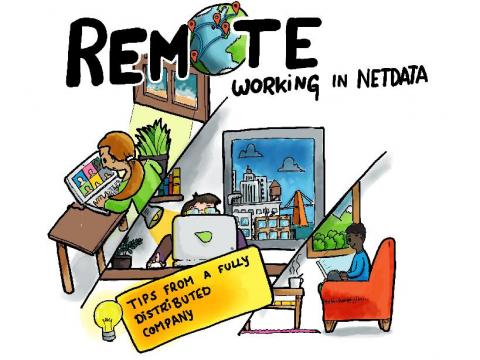
The coronavirus (COVID-19) pandemic has forced many organizations to take unprecedented steps towards remote working. As a fully distributed team, we’ve faced the common challenges of remote work. Based on our experience from our very beginning in 2018, all but a few of these organizations new to remote working will face hurdles to overcome and may try to revert to colocation as soon as possible. Remote working is hard, even when it’s carefully planned and executed.

Kubernetes Master Class: Monitoring and Alerting with Prometheus & Grafana

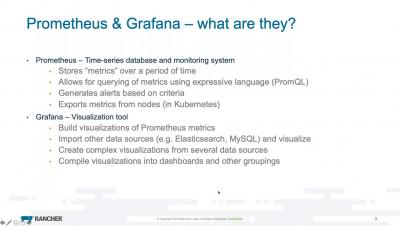
Rancher users and operators can collect custom metrics, automate alerts, notifications, and actions, and create cluster and project-level dashboards. In this class, you'll learn how to setup alerts with Rancher and Prometheus Alert Manager to find problems in your clusters before there's an outage. You'll also learn to visualize metrics for Kubernetes and for your applications so you can gather new insights to your users' usage patterns and your applications' run-time behaviors.