Sysinternals for Linux
Mario Hewardt, Microsoft
For more information be sure to check out the WSL Website and wiki page
https://ubuntu.com/wsl
https://wiki.ubuntu.com/WSL


The latest News and Information on DevOps, CI/CD, Automation and related technologies.
Mario Hewardt, Microsoft
For more information be sure to check out the WSL Website and wiki page
https://ubuntu.com/wsl
https://wiki.ubuntu.com/WSL
For teams that deal with machine learning (ML), there comes a point in time where training a model on a single machine becomes untenable. This is often followed by the sudden realization that there is more to machine learning than simply model training. There are a myriad of activities that have to happen before, during and after model training. This is especially true for teams that want to productionize their ML models.
Buildah is a tool for building OCI-compatible images through a lower-level coreutils interface. Similar to Podman, Buildah doesn't depend on a daemon such as Docker or CRI-O, and it doesn't require root privileges. Buildah provides a command-line tool that replicates all the commands found in a Dockerfile. This allows you to issue Buildah commands from a scripting language such as Bash.
The code we develop ends up being packaged into artifacts that are consumed as dependencies during the development of other software components. We rely on an artifact repository manager, like JFrog Artifactory, to resolve the complex challenges that come with consuming and developing all of these artifacts. Artifactory serves as the foundation for managing binaries in so many organizations, both large and small, as part of an effective CI/CD pipeline.
DevOps can successfully remove the bottlenecks created by waterfall methodology by improving development productivity through encouraging collaboration,continuous feedback loops, and automating processes. Collaboration. Feedback. Automation. These are the main building blocks of DevOps operations. However, not all DevOps implementations are successful. Why? Building blocks are not enough. You need to take these building blocks and design a DevOps pipeline that suits your needs.
Passing an audit is hard — whether you’re in retail, healthcare, finance, or honestly, any industry that values security. Most organizations these days are faced with regulatory standards that must be enforced, which bring both technical and business challenges that are difficult to overcome.
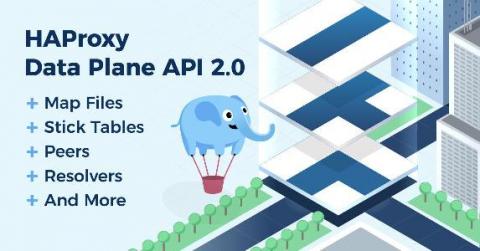
Version 2.0 of the HAProxy Data Plane API brings some exciting enhancements that unlock the power of HAProxy’s flexible configuration and its runtime capabilities. The HAProxy Data Plane API, which lets you manage your HAProxy configuration dynamically using HTTP RESTful commands, has marked a major milestone with the release of version 2.0. This release emphasizes the runtime aspects of HAProxy, giving you the ability to manage map files, stick tables, peers, DNS resolvers and more.
Go Module vulnerabilities frustrate the lives of many Go developers and can turn a simple project into a battle of endurance between the dev and their patience. With the process of CI/CD shifting left more and more, it’s becoming even more pertinent for developers to be able to track and report vulnerabilities as early as possible. JFrog GoCenter can help track and mitigate vulnerabilities and make the lives of Go developers easier.