Operations | Monitoring | ITSM | DevOps | Cloud

The latest News and Information on DevOps, CI/CD, Automation and related technologies.

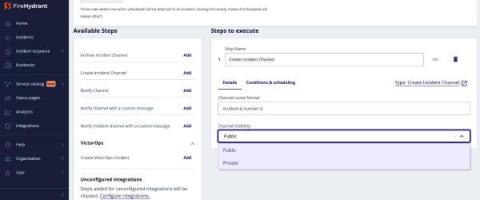
Now Available: Private Slack Channels

Ever heard the saying “Too many cooks”? If you’ve responded to incidents, you’ll likely understand the parallels. There are cases when incident command on a public channel isn’t the best option: Whatever your reason, we’ve got you covered. Now available, users can spin up a private slack channel for an incident. Read more how to do this here.

Differences between Site Reliability Engineer Vs. Software Engineer Vs. Cloud Engineer Vs. DevOps Engineer

The evolution of Software Engineering over the last decade has lead to the emergence of numerous job roles. So how different is a Software Engineer, DevOps Engineer, Site Reliability Engineer and a Cloud Engineer from each other? In this blog, we drill down and compare the differences between these roles and their functions.

Install Netdata to get started monitoring Linux in minutes

Install Netdata to monitor your Linux servers using our one-line installer. Install on physical, virtual, container, and IoT nodes. Netdata’s free, open-source monitoring agent works with Netdata Cloud to help you monitor and troubleshoot every layer of your systems to find weaknesses before they turn into outages.

Adopting A Network-as-a-Service Model

Despite the great advancements in IT infrastructure consumption models that have been enabled by the cloud, the underlying network remains the last - and long awaited - piece of the digital transformation puzzle to fall into place. In this blog, we look at the key benefits for businesses adopting a Network-as-a-Service (NaaS) model.

Cloud Testing at Facebook

At Speedscale, we are on the cutting edge of defining autonomous testing for the cloud era. However, we aren’t the only company trying to solve this problem and we enjoy learning from every perspective. That’s why Facebook’s recent blog article about autonomous testing caught my eye. They’ve built a sophisticated autonomous test system that introduces many of the same techniques we utilize.

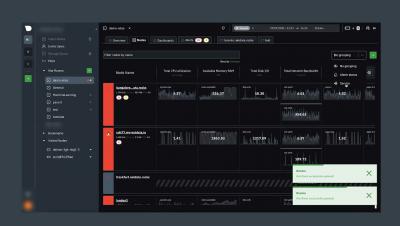
Netdata's Nodes view for troubleshooting system health and performance

This video introduces you to the Netdata Nodes view. Use this view to visualize and customize metrics from any number of Agent-monitored nodes and navigate to any specific nodes within the dashboard. View key monitoring metrics like CPU utilization, memory usage, disk usage, network traffic, and much more to get started troubleshooting performance issues or anomalies. Netdata’s free, open-source monitoring agent works with Netdata Cloud to help you monitor and troubleshoot every layer of your systems to find weaknesses before they turn into outages.

A guide to personal retrospectives in engineering

Retrospectives are a well-established resource in the software and systems engineering toolbox. From sprint retros through to post-incident reviews, we look back on our work to learn from it and to get better. We can apply the same ideas to our professional practice with a personal retrospective: writing an analysis of our experiences to learn as much as possible. We could look over a whole year of work, or focus more closely on a particular project.

10 CTO Tools Every Tech Leader Should Be Using

Managing technology isn't your only responsibility as a CTO. You could be the CIO, Digital Enabler, Data Officer, and Engineering Leader all rolled up into one, whether you work at a startup, scaleup, or enterprise. Your role as a C-suite executive for engineering requires you to research and implement the newest, most efficient technologies. As CTO, you’re responsible for: The list goes on and on. That's why you, of all people, need the right tools to manage your vital role in the digital world.

Do You Know What's Keeping Your Cloud Team up at Night?

Cloud teams are busy. In fact, Virtana’s recently published State of Hybrid Cloud and FinOps survey found that 44% of respondents have deployed more than half of their workloads in a public cloud, and 88% have deployed more than one-quarter of their workloads in a public cloud. That’s a lot of migration, optimization, and management on the cloud team’s plate; and it’s not just for right now but for the foreseeable future.