Operations | Monitoring | ITSM | DevOps | Cloud

The latest News and Information on DevOps, CI/CD, Automation and related technologies.

An overview of Monitoring Azure Kubernetes Services

Modern applications are increasingly built using containers and microservices packed with their dependencies and configurations. Kubernetes is open-source software for deploying and managing those containers at scale—and it is also the Greek word for helmsmen of a ship or pilot. Monitoring the health and performance of your Azure Kubernetes Service (AKS) cluster is critical to ensure that your applications are up and running as expected.

Common use cases for digital twins in automotive

Digital twins have become somewhat of a buzzword in the past couple of years. But what exactly are they? A digital twin, as its name indicates, is a non-physical copy of a physical object. Just like a digital scan of a physical picture. This virtual element enables a real-time view of all relevant data coming from said object. Depending on the system being studied, specific sensors can be tracked and monitored.

Part 4: Causal Observability - Level 3

It’s not surprising that most failures are caused by a change somewhere in a system, such as a new code deployment, configuration change, auto-scaling activity or auto-healing event. As you investigate the root cause of an incident, the best place to start is to find what changed. To understand what change caused a problem and what effects propagated across your stack, you need to be able to see how the relationships between stack components have changed over time.

How to deploy a React app to Kubernetes using Docker

The concept of containerization helps you run applications as lightweight virtual machines. As a web developer, setting up local development environments can be tiresome. However, using tools like Docker and Kubernetes gives developers an upper hand to quickly set up and deploy applications. This guide uses Docker to deploy a React app to Kubernetes.

The Cloud And SD-WAN

As more and more businesses move to the cloud, they discover that their traditional wide area networks (WANs) can no longer serve their needs. SD-WAN is a networking solution that offers many other benefits over traditional WANs, including reduced costs, improved performance, and increased flexibility. But what does SD-WAN stand for? Below, we'll take a deeper look at what SD-WAN solutions are and how they can help your business take advantage of the cloud.

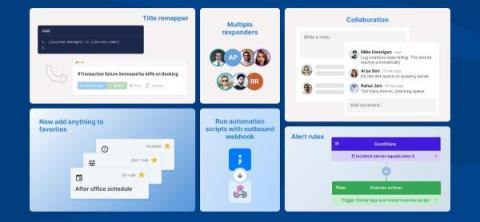
Our journey to become Powerful Incident Management platform

Over the last couple of years, Spike.sh has largely been a Simple Incident Management Platform helping engineering teams across the world. Our focus on simplicity has been well received by all of you and we couldn't be more happy about it. After speaking with users earlier this year, we quickly realised there is a lot we can do to help our responders and help them better than we currently are.

8 Steps To Take Before You Can Start Forecasting Cloud Costs

Accurate, fair budgets make everyone in the company happy. Engineers love when they can build products that make the company money, executives enjoy seeing nice, wide margins, and finance departments celebrate when everything goes according to plan. But keeping the budget for cloud computing reasonable can seem like a lofty goal when your company’s cloud spending seems to change with the direction of the wind.

Partnership: Save Your Cloud Costs with Usage AI and Qovery

You are using Qovery, and you love the product, but what about saving some money on your cloud bills on top? Today, we are making your dreams come true with a brand new partnership with Usage AI, and today, I will explain everything you need to know about it.